
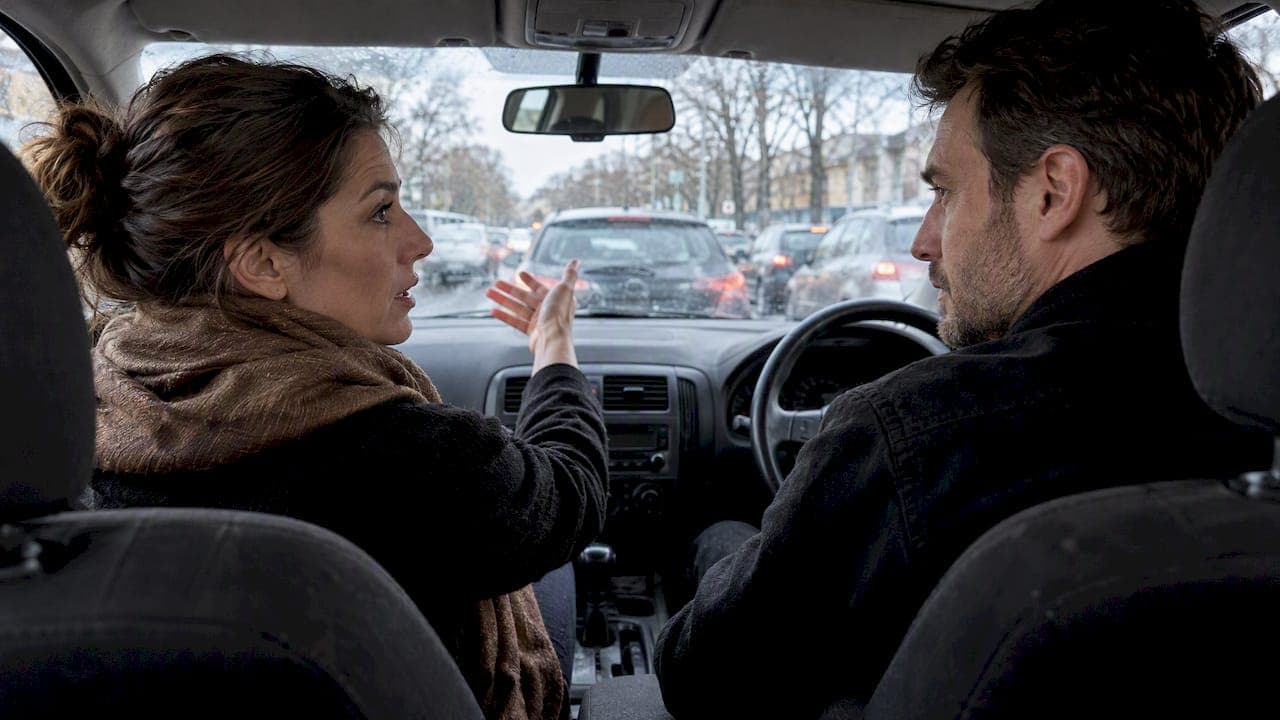
A bid for connection is any attempt, verbal, physical, or behavioral, to get your partner's attention or emotional presence. The single most effective short-term response is to turn toward it. That one habit, repeated daily, shapes how safe and satisfied both of you feel in the relationship. Below, you'll find clear examples, scripts, and a few nervous-system tools to help you catch more bids, even on your hardest days.
TL;DR:
- Responding to bids with immediate attention, even briefly, increases the likelihood of relationship stability, as couples who do so turn toward 86% of the time.
- Bids can be verbal, nonverbal, or digital, often indicated by pauses or look, making awareness and clarification essential for meaningful connection.
- Simple practices like daily check-ins, grounding breaths, and scheduled rituals help build consistent turning-toward behaviors over time.
- Missed bids often result from stress or distraction, but nervous system training can improve responsiveness and reduce reactive reactions.
- Small, regular repair efforts and honest communication about missed bids are more effective than grand gestures in maintaining emotional connection.
Table of Contents
- What counts as a bid, and the three ways people respond
- Everyday examples of bids: verbal, nonverbal, and digital
- How to respond to bids with practical scripts
- How to make clearer bids so fewer get missed
- Why bids matter: the research behind turning toward
- Daily practices that build turning-toward habits
- When nervous-system training changes what happens next
- A candid note on consistency over perfection
- A path forward if the patterns feel bigger than daily habits
- FAQ
- Sources
What counts as a bid, and the three ways people respond
Not every sentence your partner says is a bid. A bid is a specific attempt to connect: a glance, a question, a shared observation, a touch on the arm. The Gottman Institute describes bids as the basic unit of emotional communication, and notes that responses fall into three categories: turning toward, turning away, and turning against.
Turning toward means you notice the bid and respond with presence, even briefly. Your partner says, "This traffic is unreal," and you say, "Ugh, how late did it make you?" That's it. You've turned toward.
Turning away looks like silence, distraction, or a flat "mm." It's not cruelty, usually it's just a missed signal, your attention elsewhere, your nervous system already maxed out.
Turning against is sharper: sarcasm, dismissal, or criticism aimed at the bid itself. "Why are you always complaining about traffic?" shuts the door instead of opening it.
A lot of missed bids aren't about not caring. They're about "fuzzy bidding," where the bid itself is unclear. A sigh, a vague comment, or a half-finished sentence can be a genuine attempt to connect, but it's easy to read as background noise rather than an invitation. Learning to spot these quieter signals is the real skill here, and it's one you can build with practice.
Everyday examples of bids: verbal, nonverbal, and digital
Bids show up constantly, often in forms so small they're easy to miss. Training your eye to spot them is the first real skill in this whole process.
- Verbal: "You won't believe what happened at work today" is an invitation, not small talk.
- Nonverbal: A sigh while unloading the dishwasher, a glance toward you during a tense phone call, or reaching for your hand on the couch.
- Digital: Sending a meme, a news link, or a photo of something funny they saw, these count as bids even though they arrive as a notification.
- During meals: "This needs more salt" might be a complaint, or it might be a bid for you to engage with the cooking process together.
- At bedtime: A partner lingering in the doorway after saying goodnight is often testing whether you'll invite a few more minutes of connection.
- In parenting moments: "She said her first full sentence today" is rarely just information, it's an invitation to share in the moment.
A quick way to check if something is a bid: ask whether your partner paused, looked at you, or waited half a second after speaking. That pause is often the tell.
How to respond to bids with practical scripts
Responding well doesn't require grand gestures. Most of the time, it takes five seconds and a sentence.
- Acknowledge first. A simple "Oh wow, tell me more" or "That sounds rough" signals you heard them.
- Ask a follow-up. "What happened next?" keeps the door open rather than closing the exchange.
- Offer something concrete when it fits. "Want me to look at it with you?" turns attention into support.
- Use deferred attention when you genuinely can't engage. Try: "I really want to hear this, give me five minutes to finish this email and I'm all yours." Then follow through.
- Repair quickly if you miss one. "I was distracted a second ago, can you say that again? I want to actually hear it" repairs the miss without over-apologizing.
The hardest bids to catch are the ones that arrive when you're stressed, tired, or already overstimulated — a period when partners need support too. In those moments, your nervous system is prioritizing threat scanning over social attunement, which is exactly why bids slip past unnoticed. A useful practice is to pause for one breath before responding to anything when you're wound up. That single breath often creates just enough space to notice the bid instead of reacting past it.
Pro Tip: When you're distracted, name it out loud instead of pretending to listen, "My brain's half on this task" buys you honesty and buys your partner patience.
How to make clearer bids so fewer get missed
Bids get missed in both directions. Sometimes your partner misses yours because they're too indirect to register as a request at all. Clarity fixes more of this than people expect.
- Use your words. A meaningful look across the room is sweet, but it's easy to miss; saying "Come sit with me for a minute" removes the guesswork.
- Ask for what you actually want. "I wish you talked to me more" is vague; "Can we talk for ten minutes before bed tonight?" is a bid your partner can act on.
- Frame requests positively. Gottman's own guidance on making better bids points to converting complaints into specific, positive asks rather than criticisms.
Here's what that conversion looks like in practice. "You never ask about my day" becomes "I'd love it if you asked me one thing about my day when I get home." "You're always on your phone" becomes "Can we have phone-free dinners this week?" The second version in each pair gives your partner something to actually do.
A short drill worth trying with a partner: each of you writes down one recent complaint, then rewrites it as a direct, positive request. Read both versions out loud. Most couples notice the rewritten version feels less like an attack and more like an invitation, and that shift alone changes how the other person responds.
Pro Tip: If a bid keeps getting missed, say so directly rather than letting resentment build, "I've tried to bring this up a few times and I don't think it's landing" is itself a clear bid.
Why bids matter: the research behind turning toward
This isn't just a nice habit, it's one of the clearest predictors of relationship survival that Gottman's lab has found. In longitudinal research from the Gottman Institute, couples who stayed married turned toward their partner's bids an average of 86% of the time, while couples who later divorced turned toward only 33% of the time.
The gap matters more than it might sound. Couples who stayed together turned toward bids 86% of the time, versus 33% among couples who divorced, a difference the Gottman Institute frames as one of the clearest behavioral splits between stable and struggling relationships.
That gap isn't about one dramatic fight or one grand romantic gesture. It's built from hundreds of tiny moments, the sighs, the comments, the glances, that either get met or get missed. Each turned-toward bid works like a small deposit into what researchers call an emotional bank account. Gottman's writing on this concept frames consistent responsiveness as a buffer that makes couples more forgiving of each other's occasional missteps.
The payoff isn't just about staying together, it reaches further into how people feel day to day. Longitudinal analysis from the MIDUS study found that perceived partner responsiveness predicts increases in eudaimonic well-being over a decade, and that responsiveness is linked to reduced emotional reactivity to daily stressors. In plain terms: partners who feel consistently met by each other handle bad days better, for years afterward.
A broader review of kindness and social connection echoes this, finding that small acts of responsiveness carry measurable mental health benefits, including lower stress reactivity. The practical implication is reassuring: you don't need to be a flawless partner. You need to be a consistent one.

Daily practices that build turning-toward habits
Small, repeatable habits move the needle more than occasional big efforts. These exercises target both the behavior of turning toward and the internal state that makes it possible in the first place.
- Phone-down minutes. Pick one transition in your day, arriving home, finishing dinner, and put the phone away for ten minutes.
- Two-sentence check-ins. Ask one specific question and actually wait for the full answer, "What was the best and worst part of your day?" works well.
- A scheduled daily check-in. Three minutes, no screens, just two questions: "What's on your mind?" and "What do you need from me today?"
- A weekly undistracted ritual. Thirty minutes, once a week, with no phones, no chores, just conversation, a walk, or sitting together with no agenda.
- A grounding breath before high-stress conversations. Inhale for four counts, hold for four, exhale for six. This slows your heart rate and widens your attention enough to notice bids you'd otherwise miss under stress.
The breathing piece matters more than it sounds like it should. When your nervous system is in a stress response, attention narrows to threats and tasks, and subtle bids get filtered out entirely. A few slow exhales before a hard conversation, or before walking through the door after a rough day, can be the difference between hearing a bid and missing it completely. For more on reading your own emotional signals before they take over a conversation, this piece on practical emotional expression for men builds on the same idea.
Pro Tip: Set a recurring reminder for your weekly ritual rather than relying on memory, connection habits survive longer when they're scheduled like anything else that matters.
When nervous-system training changes what happens next
Missed bids often aren't a communication problem first, they're a regulation problem. When your nervous system is stuck in overdrive, from work stress, old patterns, or just a long week, you can hear a bid and still fail to respond to it, because your system is busy managing a perceived threat instead of connecting.

This is a gap that specific nervous system training methods aim to close. Rather than teaching more scripts, such methods train the nervous system to stay grounded under pressure, making communication tools usable in real moments instead of just in theory. People who have used such approaches report shifts that show up most clearly in their closest relationships: steadier communication, faster recovery after missed moments, and a felt sense of reconnection beyond what talk alone produces. Self-practice with the tools in this article helps many people. For patterns that keep repeating despite real effort, one-on-one coaching works at the layer underneath the behavior.
A candid note on consistency over perfection
You will miss bids. Your partner will too. That's not a verdict on the relationship, it's just what happens when two nervous systems are both managing their own stress most days.
What actually matters is the repair, the quick "I missed that, say it again" that keeps the account open rather than letting a miss calcify into distance. Small deposits, made consistently, outperform the occasional grand gesture by a wide margin over time.
If missed bids have turned into a pattern that neither of you can shift, constant deflection, chronic shutdown, or conversations that turn against each other more often than toward, that's a signal worth taking seriously. A therapist or coach trained in this terrain can help you see what's underneath the pattern before it hardens further.
— Jay
A path forward if the patterns feel bigger than daily habits
Reading about bids is useful. Changing how your body responds to stress in the actual moment a bid arrives is a different kind of work, and it's where structured coaching tends to help men the most. Coaching services are available that include private coaching, group sessions, and workshops focused on nervous system training to help individuals stay steady instead of defaulting to shutdown or deflection when a bid shows up at a challenging time.

This kind of support tends to matter most when the same miss keeps repeating: you notice the bid, you want to respond, and something older takes over before you get the chance. That's not a character flaw, it's a pattern your body learned, and patterns that were learned can be retrained.
If that sounds familiar, you can see the available formats and what each one involves on the why work with me page, and go from there at your own pace.
FAQ
What are examples of bids for connection?
Bids include sharing a story, sighing while doing a chore, sending a funny link, reaching for your partner's hand, or glancing over during a hard conversation. Any attempt to get attention or emotional presence counts, even subtle or wordless ones, according to Gottman's research on bids.
What is the 3-3-3 rule for intimacy?
There's no established 3-3-3 rule for intimacy tied to Gottman's bid research or the broader studies cited in this article. Definitions circulating online vary widely and aren't backed by the sources used here, so it's worth treating any specific version you encounter with caution.
What are bids for connection in the Gottman Method?
In the Gottman Method, a bid is any verbal, physical, or behavioral attempt to get a partner's attention, affection, or support, and the response falls into turning toward, turning away, or turning against. Gottman's longitudinal research found couples who stayed married turned toward bids 86% of the time, versus 33% among couples who divorced.
What is the 72 hour intimacy rule?
An intimacy rule based on a specific time frame isn't part of the Gottman bid research or the other sources behind this article, and no consistent definition for such a rule appears in that body of work. If you've seen it referenced elsewhere, it likely comes from a different framework than the one covered here.
How does coaching help with missed bids in a relationship?
Coaching that targets nervous-system regulation, like the Unshakable Man Method™ offered through Jay Scott Coaching, can help men stay present enough to notice and respond to bids instead of defaulting to shutdown or deflection under stress. This differs from communication coaching alone, since it addresses the reactivity that causes bids to get missed in the first place.
Sources
- MIDUS findings — perceived partner responsiveness and well-being
- Want to Improve Your Relationship? Start Paying More Attention to Bids
- PMC — review on kindness / social connection and mental health