
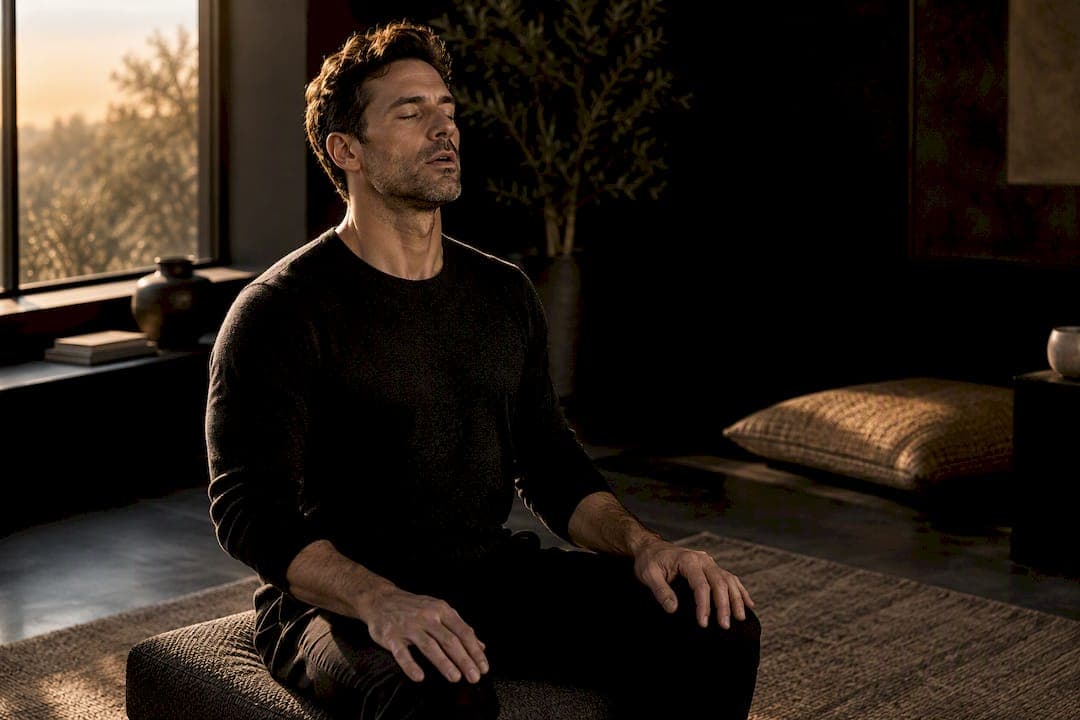
Yes, breathwork can ease acute anxiety for many people, and you do not need special equipment or a quiet retreat to start. Try cyclic sighing, diaphragmatic breathing, or box breathing for a five minute practice today. Start gently, and if you feel panic building, chest pain, or severe dizziness, stop and reach out for medical or professional support.
TL;DR:
- Practice daily for at least five minutes, preferably with guided instruction, focusing on slow, rhythmic breathing to improve long-term anxiety management.
- Avoid fast, intense breathwork protocols, as they do not consistently outperform simpler, slower techniques and may cause discomfort or increased anxiety.
- Prioritize consistent routines, such as practicing before stressful events, to build automatic responses rather than relying on reactive breathing during crises.
- Be aware of physical warning signs like dizziness or tingling, and stop immediately if symptoms worsen or do not resolve, seeking medical support if necessary.
- Incorporate breathwork into a broader nervous-system training routine that includes pattern awareness and behavioral anchors for more sustained anxiety reduction.
Table of Contents
- Breathwork techniques you can try right now
- Why slower breathing calms your nervous system
- What the research actually shows about breathwork and anxiety
- Building a breathwork routine that actually sticks
- When breathwork isn't enough, and what to do instead
- How breathwork fits into nervous-system training
- The gap between breathing advice and actually changing how you respond to stress
- If you want guided, personalized help with nervous-system regulation
- Further reading and primary sources
- Sources
- FAQ
Breathwork techniques you can try right now
You don't need to master a dozen methods. A handful of well-studied breath patterns cover most situations, from a racing heart before a presentation to the low hum of everyday stress. Here's how to do each one, and when it fits.
- Cyclic sighing. Take a normal inhale through your nose, then a second, shorter inhale on top of it to fully fill your lungs, then release a long, slow exhale through your mouth. Repeat this pattern for 5 minutes. A randomized study from Stanford Medicine found that five minutes of daily cyclic sighing improved mood and lowered resting respiratory rate in 111 healthy volunteers over a month, with cyclic sighing showing the strongest boost in daily positive mood among the breathing groups tested. Use it when stress hits fast: before a hard conversation, after a stressful email, or when your thoughts start racing.
- Diaphragmatic breathing. Sit or lie down with one hand on your chest and one on your belly. Breathe in slowly through your nose so your belly rises more than your chest, then exhale for 4 to 6 seconds, longer than your inhale. This is your baseline practice, the one to build daily, since it trains your body to breathe from the diaphragm instead of shallow chest breaths that often accompany chronic stress.
- Box breathing (equal breathing). Inhale for a count of 4, hold for 4, exhale for 4, hold for 4, and repeat. Some people prefer a simpler equal-count version without holds: just inhale and exhale for matching counts. This works well during meetings, before a performance, or anywhere you need a discreet reset without closing your eyes or lying down.
- 4-7-8 breathing. Inhale through your nose for 4 counts, hold for 7, exhale slowly through your mouth for 8. This one asks more of you, since longer holds can feel uncomfortable or even provoke lightheadedness in people who are sensitive to breath holding. If holding your breath makes you more anxious rather than less, skip the hold and stick with cyclic sighing or diaphragmatic breathing instead.
Lightheadedness or tingling in your hands is usually a sign you are breathing too hard or too fast. Slow down, shorten your exhale count if needed, and let your breathing return to normal before continuing. If dizziness persists, stop and sit quietly until it passes.
Pro Tip: Pick one technique and practice it daily for a week before adding a second. Switching methods too often makes it hard to notice what is actually working for you.
Why slower breathing calms your nervous system
The reason these techniques work, when they work, comes down to a fairly simple mechanism. Long, slow exhales stimulate the vagus nerve, which activates your parasympathetic nervous system, the branch responsible for rest and recovery rather than fight or flight. When that system engages, your heart rate slows and your body shifts out of high alert.
Paced breathing, especially patterns with a slower rate and a longer exhale than inhale, changes measurable markers of this shift. A 2018 systematic review found that slow breathing, generally under about 10 breaths per minute, is associated with increased heart-rate variability and stronger respiratory sinus arrhythmia, the natural rise and fall of heart rate that tracks with each breath. Both are considered plausible markers of a calmer, less reactive nervous system in healthy people.
It's worth being honest about what this evidence actually shows. Higher heart-rate variability and better respiratory sinus arrhythmia are consistent with reduced physiological arousal, but a favorable change in these measures during a lab session does not prove that breathwork resolves anxiety for everyone or that every slow-breathing pattern produces the same benefit. These are mechanism-level findings, and they explain why breathwork might help. They are not a guarantee that it will.
Your results will also depend on things that vary from person to person. Someone who already breathes shallowly and quickly under stress may notice a bigger shift from diaphragmatic practice than someone whose baseline breathing is already slow and even. Attention style matters too: if you tend to get anxious about internal sensations, a technique that asks you to focus closely on your breath can occasionally backfire, a point worth keeping in mind as you experiment with what fits you.
What the research actually shows about breathwork and anxiety
The evidence for breathwork is real, but it is not uniform, and the details matter more than the broad claim that "breathing exercises help."
- A systematic review of 58 studies covering 72 breathing interventions found that 54 of those interventions were effective, and identified specific components tied to success: avoiding fast-only breathing paces, running sessions of at least 5 minutes, including human-guided training, and practicing across multiple sessions over time.
- Not every breathing style holds up equally well. A randomized controlled trial of brief remote high ventilation breathwork with retention, tested in 200 healthy young adults, found no advantage over an active comparator for stress or anxiety outcomes, which suggests that fast, intense breathing protocols do not automatically outperform simpler, well-designed alternatives.
- Meta-analytic reviews of breathwork more broadly report reductions in subjective psychological distress with small to medium effect sizes, though the studies behind those numbers vary widely in quality and design, which tempers how confidently any single technique can be recommended.
Five minutes of daily cyclic sighing measurably improved mood and lowered resting respiratory rate over a month in a randomized Stanford study of 111 healthy volunteers, one of the more direct pieces of evidence that a short, simple daily practice can shift how you feel day to day.
The practical takeaway is straightforward: favor guided, slower, and repeated practices over fast or dramatic breathing patterns, and give any technique at least 5 minutes per session before judging whether it helps.

Building a breathwork routine that actually sticks
Consistency matters more than intensity here. A five minute daily habit, practiced for several weeks, tends to beat an occasional twenty minute session done once a month.
- Start with 5 minutes a day for 2 to 4 weeks. Pick one technique, cyclic sighing or diaphragmatic breathing are the gentlest starting points, and practice at the same time each day so it becomes routine rather than a reaction you reach for only in crisis.
- Practice before you need it. Use your chosen technique ahead of a stressful meeting or event, not only in the middle of one. This builds familiarity, so the pattern feels automatic when you need it most.
- Avoid forcing big breaths. Comfort and pacing matter more than depth. Breathing hard or gasping for a bigger inhale usually increases tension rather than releasing it, and a slower exhale almost always beats a bigger inhale for calming effect.
- Consider guided training if self-practice isn't clicking. A systematic review of implementation factors found that human-guided instruction, along with multiple sessions and sustained practice, was associated with stronger outcomes than sessions under 5 minutes done without guidance. If an app or a coach helps you stay consistent, that structure is doing real work, not just adding convenience.
Pro Tip: If you keep forgetting to practice, anchor it to something you already do daily, like your morning coffee or your commute, rather than relying on willpower alone.
Know your red flags. Stop immediately and seek medical attention if you experience chest pain, fainting, or severe dizziness. If a technique seems to be making your anxiety worse rather than better, that is real information, not a sign you are doing it wrong, and it means it's time to try a different approach or talk to a clinician.
When breathwork isn't enough, and what to do instead
Breathwork is not a fix for every kind of anxiety, and for some people, it can briefly make things feel worse before it helps, or not help at all. People with panic disorder or a history of trauma sometimes find that focused attention on their breath heightens distress rather than easing it, since close attention to bodily sensations can itself trigger alarm in a nervous system that is already primed to detect danger.
If a breathing exercise increases your anxiety, stop and switch to something else. Grounding techniques, such as naming things you can see and touch around you, or simple movement like a short walk, can interrupt a spiral without asking you to focus inward. For anxiety that is frequent, severe, or tied to panic attacks, clinician-guided approaches, including therapy or medication when appropriate, are often the more reliable path, and breathwork can sit alongside those treatments as one supportive tool rather than the whole plan.
How breathwork fits into nervous-system training
At Jay Scott Coaching, breathwork shows up as one piece of a larger practice: training the nervous system to stay grounded under pressure rather than defaulting to overthinking or avoidance. For high-performing men, the goal is rarely a single calming technique. It's building the capacity to notice tension early and respond deliberately instead of reactively.
In coaching sessions, breath practices are often paired with behavior anchors, small, repeatable actions tied to a specific moment of stress, so the calming effect connects to something concrete rather than staying abstract. Pattern mapping, tracking where and when anxiety tends to show up, helps clients see which situations call for a quick reset like cyclic sighing versus a longer conversation about what's driving the reaction. Accountability check-ins, whether in one-on-one sessions or group workshops, keep the practice from fading after the first good week, which is where most self-directed efforts quietly stall.
The gap between breathing advice and actually changing how you respond to stress
Most breathwork content treats the technique as the whole answer, and that's where it falls short. Breathing exercises are genuinely useful for shifting your state in the moment, but a five minute practice does not, by itself, change the deeper pattern of overthinking or avoidance that drives anxiety in the first place for a lot of people.
The evidence backs a narrower, more useful claim: consistent, guided, moderately paced breathing practice can lower reactivity and improve mood over weeks, not overnight. What gets overlooked is that the technique matters less than the consistency and the guidance behind it. Fast, dramatic breathing protocols have not reliably outperformed simpler methods in controlled trials, yet they get outsized attention because they feel more intense and more like "doing something."
If you take one thing from this, prioritize a boring, repeatable five minute habit over a complicated routine you'll abandon in two weeks. Breathwork works best as a tool inside a bigger practice of noticing your patterns, not as a standalone fix.
*— Jay
If you want guided, personalized help with nervous-system regulation
Breathwork gives you a real tool, but tools work best with someone helping you use them consistently and noticing what you might miss on your own. That's the gap coaching fills.

Coaching services are available for high-performing men who want to stop white-knuckling their way through stress and build real capacity to stay grounded under pressure. The coaching draws on a method that trains emotional regulation at the nervous-system level rather than relying on insight alone, pairing breath-based tools with pattern mapping and direct accountability so change shows up in your relationships and your work, not just in a five minute exercise.
- Private coaching for one-on-one work on specific patterns.
- Group sessions for shared accountability alongside others working through similar challenges.
- Workshops and immersions for deeper, focused work outside your everyday routine.
If you've tried breathing exercises on your own and noticed they help briefly but don't stick, or if high-stakes performance anxiety keeps showing up in ways self-practice hasn't solved, that's usually a sign coaching could help more than another app or technique. Learn more about private coaching, groups, and workshops and see whether it's the right next step for you.
Further reading and primary sources
For readers who want to look at the original research or explore related wellness support, these are the sources behind the claims in this guide.
- The Stanford Medicine study on cyclic sighing is the randomized trial behind the daily five minute practice recommendation.
- The systematic review of implementation guidelines breaks down which components of breathing practices are tied to better outcomes across 58 studies.
- The randomized trial on high ventilation breathwork shows why fast-breathing protocols are not automatically superior to simpler methods.
- The 2018 review of slow breathing and autonomic function explains the physiological mechanisms referenced throughout this guide.
- For complementary, nonclinical wellness support, Vitaluxe Drip Lounge offers recovery-focused resources some readers use alongside breath practice.
For anxiety that feels severe, persistent, or tied to panic, consult a physician or licensed mental health professional rather than relying on self-directed research alone.
This article is general information, not a substitute for advice from a qualified doctor. Consult a qualified healthcare professional about your own circumstances before acting on anything here.
Sources
- 'Cyclic sighing' can help breathe away anxiety — Stanford Medicine
- Breathing Practices for Stress and Anxiety Reduction: Conceptual Framework of Implementation Guidelines Based on a Systematic Review
- Effects of brief remote high ventilation breathwork with retention on mental health and wellbeing: a randomised placebo-controlled trial
- Systematic review of slow breathing effects on autonomic measures (2018)
FAQ
What is the 3-3-3 rule for anxiety?
The 3-3-3 rule is a grounding technique, not a breathing method: you name 3 things you can see, 3 sounds you can hear, and move 3 parts of your body. It's often used alongside breathwork to interrupt a spiral of anxious thoughts by redirecting attention outward.
How can I reduce anxiety naturally without medication?
Slow, guided breathing practices like diaphragmatic breathing or cyclic sighing can meaningfully improve mood when practiced daily for several weeks. Combining breathwork with regular movement, consistent sleep, and mindfulness or therapy tends to work better than any single method alone.
How do I stop rapid, anxious breathing?
Slow your exhale first: a longer, controlled exhale through your mouth signals your nervous system to calm down faster than trying to control the inhale. If dizziness or a sense of losing control accompanies rapid breathing, stop, sit down, and seek medical attention if it does not resolve within a few minutes.
Can anxiety cause low oxygen levels?
Anxiety itself does not typically cause dangerously low oxygen levels in otherwise healthy people, though rapid or shallow breathing during anxiety can cause temporary sensations like lightheadedness or tingling. If you have a preexisting respiratory or cardiac condition, or symptoms feel severe, consult a physician rather than assuming anxiety is the sole cause.