
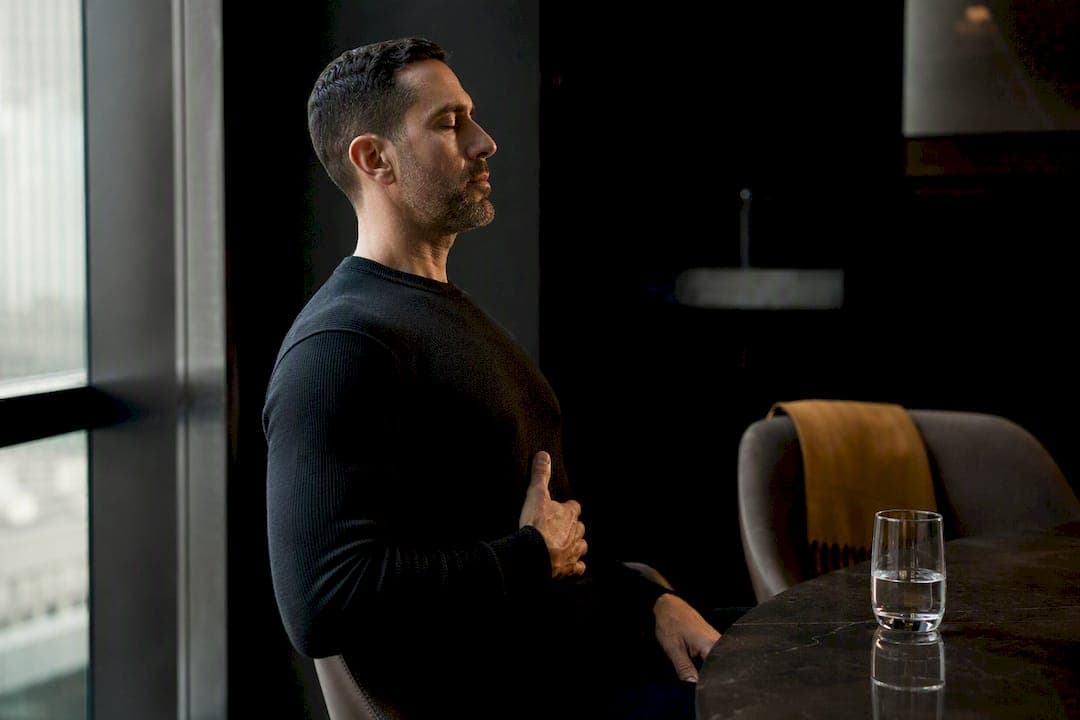
Nervous system regulation is the practice of helping your autonomic nervous system shift out of chronic activation and back into a calmer, more flexible state. The payoff is real: less reactive anxiety, faster recovery from stress, and more clear-headed decisions under pressure. One place to start right now is a slow diaphragmatic breath, in for four counts, out for six. The rest of this guide shows you why that works and what to add next.
TL;DR:
- Most people notice small improvements in breathing and reactivity within a few weeks of daily regulation practice, but lasting change takes months.
- Combining one acute tool, like diaphragmatic breathing, with consistent daily anchors such as sleep routines enhances long-term autonomic flexibility.
- Chronic illness, trauma, and age can slow progress, requiring gentler techniques and often professional support for effective regulation.
- Men often quit regulation practices too early, mistaking subtle, boring techniques for ineffective, missing their cumulative impact over time.
- Addressing nervous system dysregulation improves decisiveness and reduces impulsivity, restoring clearer leadership and decision-making ability.
Table of Contents
- What Does Nervous System Regulation Actually Mean?
- What Are the Signs Your Nervous System Is Dysregulated?
- Practical Techniques: What to Use and When
- A Simple Daily Routine to Widen Your Tolerance
- How Long Does It Actually Take to Feel Different?
- When Should You Talk to a Professional?
- How Chronic Illness and Trauma Change the Picture
- Does Nervous System Regulation Look the Same at Every Age?
- How Coaching Applies These Principles in Real Time
- The Honest Take on Why Most People Quit Too Early
- Sources
What Does Nervous System Regulation Actually Mean?
Your autonomic nervous system runs in the background, controlling heart rate, digestion, and breathing without you ever thinking about it. It has three working parts, and understanding each one changes how you approach stress.
- Sympathetic nervous system (SNS): your accelerator. It fires up heart rate and alertness when you sense a threat, real or imagined.
- Parasympathetic nervous system (PNS): your brake. It slows things down and signals to your body that it's safe to rest and digest.
- Enteric nervous system (ENS): the network lining your gut, often called your "second brain," which reacts to stress with nausea, cramping, or appetite changes.
Together these divisions make up the autonomic nervous system, which governs involuntary processes like blood pressure and respiration. The vagus nerve is the main highway for parasympathetic signals, and it's central to how your body calms itself down once a threat passes.
The goal isn't to stay calm all the time. It's autonomic flexibility, the ability to move between activation and rest as the situation demands, without getting stuck on high alert. Therapists call the comfortable middle ground your "window of tolerance." Chronic stress narrows that window until small annoyances feel like emergencies.
What Are the Signs Your Nervous System Is Dysregulated?
Stress becomes dysregulation when your body stays braced for danger long after the danger has passed. The stress response starts in the amygdala and hypothalamus, and it's supposed to switch off once the parasympathetic system kicks back in. When it doesn't, here's what to watch for.
- Physical signs: racing heart at rest, shallow breathing, clenched jaw, digestive trouble, chronic fatigue despite sleep.
- Emotional signs: irritability that surfaces fast, feeling numb or checked out, trouble focusing, a sense of dread with no clear cause.
- Behavioral signs: avoiding hard conversations, overworking to outrun anxious energy, snapping at people you love and not knowing why.
Ask yourself two questions. Does calm ever fully arrive, even after the stressful event ends? And has this pattern lasted weeks, not days? If you answered no to the first and yes to the second, you're likely dealing with dysregulation, not ordinary stress.
Practical Techniques: What to Use and When
Different tools solve different problems. Some work in sixty seconds during a panic spike. Others build resilience over weeks. Knowing which is which saves you from grabbing the wrong tool at the wrong time.
For acute spikes (right now, in the moment):
- Physiological sigh: two quick inhales through the nose, one long exhale through the mouth. Repeat three times. This is one of the fastest ways to cue your vagus nerve that the threat has passed.
- 4-7-8 breathing: inhale for four counts, hold for seven, exhale for eight. Great before a hard conversation or a big presentation.
- 5-4-3-2-1 grounding: name five things you see, four you hear, three you feel, two you smell, one you taste. This pulls your attention out of your head and back into your body, which is exactly what sensory anchoring is designed to do.
For cumulative resilience (built over days and weeks):
- Movement: a brisk walk discharges built-up sympathetic energy. Gentle yoga does the same thing more slowly. Short bursts of harder exercise, like sprinting stairs briefly, can also help when you're stuck in a flat, numb state and need to come back up.
- Progressive muscle relaxation (PMR): tense each muscle group for five seconds, then release, working from your feet to your head. It's one of the most consistently recommended tools in clinical self-regulation guides, especially before bed.
- Body-scan mindfulness: lie still and mentally scan from head to toe, noticing tension without trying to fix it. This trains awareness, which is the first step toward regulation.
- Parasympathetic anchors: eating slowly without your phone, softening your jaw on purpose, going to bed at the same time every night. Small, boring, repeated. That's exactly why they work.
Pro Tip: Pick one acute tool and one daily anchor. Trying to master five techniques at once usually backfires. Repetition of a single simple habit builds more autonomic flexibility than novelty ever will.
A caution worth taking seriously: cold exposure and extended breath holds can trigger a strong vagal response, but they aren't a permanent fix and they carry real risk for people with certain heart conditions. Treat them as training inputs, not medical treatment, and check with a doctor first if you have any cardiovascular history.

A Simple Daily Routine to Widen Your Tolerance
You don't need an hour. You need ten to twenty minutes, placed at the right moments.
- Morning (3 to 5 minutes): before checking your phone, do five physiological sighs and set one intention for the day.
- Midday (5 minutes): a short walk outside, phone away, noticing three things you can hear. This resets a nervous system that's been sitting in fight-or-flight mode since your 9 a.m. meeting.
- Evening (10 minutes): progressive muscle relaxation or a body scan, followed by a consistent bedtime. Sleep isn't optional recovery time here. It's the infrastructure your nervous system needs to fully reset after a day of activation.
Short on time? Cut the routine to the morning sighs and the evening wind-down. Consistency beats duration. A five-minute practice done daily outperforms a forty-minute session done once a week, because your nervous system learns through repetition, not intensity.
How Long Does It Actually Take to Feel Different?
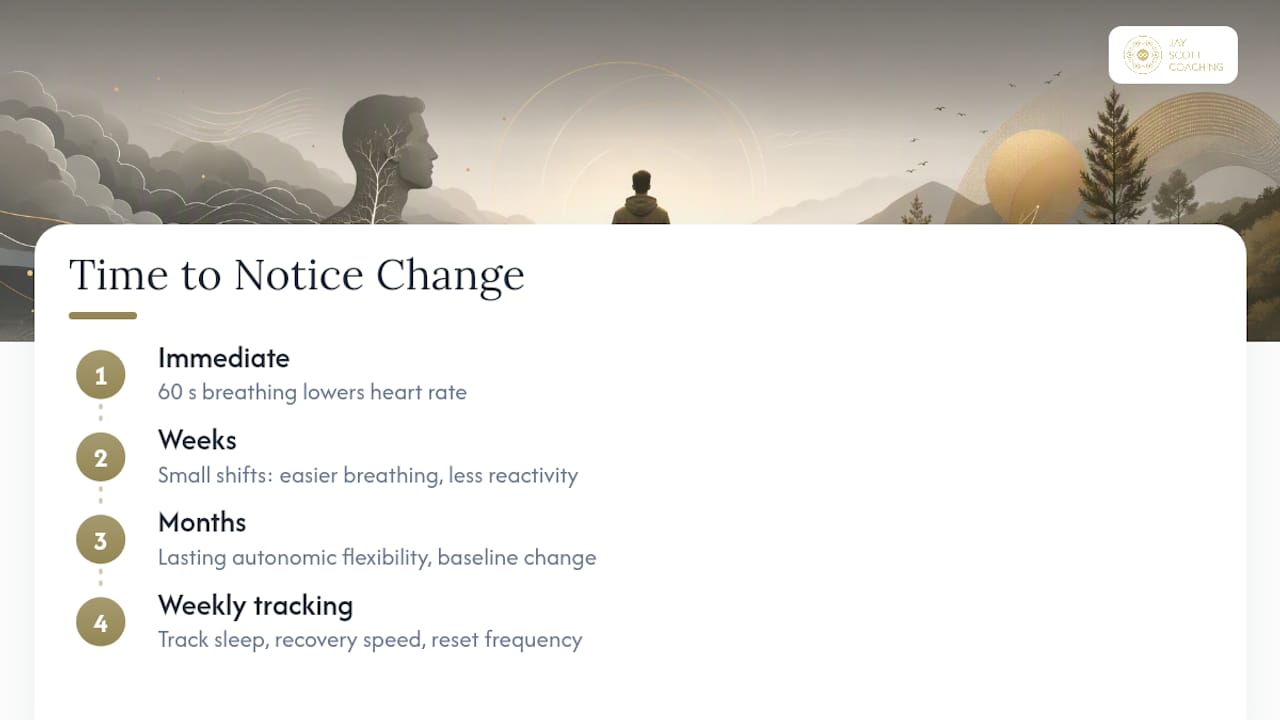
Most people notice small shifts, easier breathing, a bit less reactivity, within a couple of weeks of consistent practice. Real autonomic flexibility, the kind that changes how you handle a hard week at work or a tense conversation at home, tends to build over months rather than days.
There's a difference between symptom relief and lasting change. A single breathing exercise can lower your heart rate in sixty seconds. Rewiring your baseline reactivity takes sustained practice. Track your sleep quality, how quickly you recover after a stressful event, and how often you need to actively "reset" during the day. Those three numbers, watched weekly, tell you more than how calm you feel on any given afternoon.
When Should You Talk to a Professional?
Some signs need more than a breathing exercise. Seek medical or mental health support if you experience a persistently racing heart, fainting spells, a sharp decline in your ability to function at work or home, or any thoughts of self-harm.
A primary care doctor can rule out physical causes like thyroid issues. A therapist trained in trauma or somatic work can address deeper patterns. Before your appointment, jot down a simple symptom log, your recent sleep, current medications, and what triggered your worst episodes. That prep work makes the first session far more useful.
How Chronic Illness and Trauma Change the Picture
A nervous system dealing with chronic illness or unresolved trauma doesn't reset the same way a healthy one does. Chronic pain, autoimmune conditions, and long-term illness keep the sympathetic system partially engaged simply because the body is managing an ongoing internal threat. That's a heavier baseline load before daily stress even enters the picture.
Trauma works differently but lands in a similar place. A nervous system shaped by past trauma often struggles to tell the difference between an old, resolved danger and a present, harmless moment. This is a case of chronic low-grade threats being read by the body as active danger, and it's why structured transition rituals, a change of clothes after work, a specific breathing sequence before a hard meeting, matter so much. They give the body a clear signal that one phase has ended and another has begun.
For someone carrying either of these histories, the standard toolkit still applies, but expect a slower timeline and more sensitivity to overstimulation. Movement that energizes one person might overwhelm another. Grounding exercises may need to be gentler and shorter. This is also where professional support earns its place. Trauma-informed therapy and coordinated medical care aren't a sign that self-regulation techniques failed. They're the layer that makes those techniques land.
Does Nervous System Regulation Look the Same at Every Age?
No, and treating it as one-size-fits-all is a common mistake. Younger adults, especially those in high-pressure careers, often carry sympathetic overactivation from work stress and inconsistent sleep. Their nervous systems are usually still flexible, which means techniques like breathwork and movement tend to produce visible results within weeks.
Middle-aged adults frequently juggle career pressure with caregiving responsibilities, and their stress tends to be more chronic and layered, less a single crisis, more a slow accumulation. Regulation work at this stage often needs to target consistency (the daily anchors) over acute fixes, because the nervous system has had years to settle into a high-alert baseline.
Older adults face a different physiological reality. Vagal tone naturally declines with age, and some medications affect heart rate variability, which changes how techniques like slow breathing actually perform. That doesn't make regulation less valuable. It makes gentler tools, walking over sprinting, seated breathing over intense breathwork, more appropriate.
Across every age group, the same underlying principle holds: consistency matters more than intensity. A twenty-five-year-old and a sixty-five-year-old are both training the same vagal pathways. They're just starting from different baselines and need different paces to get there.
How Coaching Applies These Principles in Real Time
Coaching work built on these same regulation principles looks different from a solo breathing practice, mostly because it happens under real pressure, in real relationships and careers. A coaching method can teach high-performing men to notice dysregulation as it happens and use ritualized anchors, consistent breath sequences, posture resets, deliberate pauses before reacting, to stay grounded instead of defaulting to overthinking or avoidance.
Sessions often focus on specific pressure points: the transition from work mode to home mode, or a high-stakes decision that used to trigger spiraling. Pattern mapping helps identify where a man's nervous system consistently gets hijacked, and the work builds from there. For men who want structured, guided support instead of piecing techniques together alone, individual coaching offers that direct application.
If work stress is the main trigger behind your dysregulation, it's worth examining that source directly. A stress-free approach to career transitions can reduce the load your nervous system is carrying before you even get to the breathing exercises. And if self-sabotage keeps undoing your progress, patterns explored in work on the upper limit problem often explain why capacity for calm gets capped just as things start improving.
Ready to see what structured coaching support looks like in practice? Jay Scott Coaching works with men who are done managing stress alone and want a real, repeatable framework for staying grounded under pressure.
The Honest Take on Why Most People Quit Too Early
Here's what gets missed in most conversations about nervous system regulation: people expect it to feel dramatic, and when it doesn't, they assume it isn't working. A physiological sigh doesn't feel like a breakthrough. It feels like nothing, at first. That's precisely the problem. The techniques that actually rewire your baseline reactivity are boring by design, and boring is a hard sell in a culture that wants transformation to feel like an event.
The bigger issue I see is men treating regulation as an emergency tool instead of a daily practice. They'll use grounding exercises during a panic spike, feel better in five minutes, and stop there. That's symptom management, not regulation. Real change comes from the unglamorous repetition, the same breath sequence every morning, the same wind down every night, [done] long after it stops feeling necessary. The men who see the biggest shifts aren't the ones who found the perfect technique. They're the ones who kept showing up to an average one, daily, for months.
There's also a quieter cost to skipping this work: a dysregulated nervous system doesn't just create anxiety, it erodes decisiveness. Men stuck in chronic activation tend to either freeze on big decisions or react impulsively to escape the discomfort of sitting with uncertainty. Fixing the nervous system isn't just about feeling calmer. It's about reclaiming the clear-headed leadership that gets lost when your body is stuck bracing for a threat that already passed.
— Jay
Sources
- Anatomy, Autonomic Nervous System - StatPearls - NCBI Bookshelf
- Understanding the stress response - Harvard Health
- Stanford Lifestyle Medicine – survival mode / sleep as infrastructure
- Self-Soothing: How to Regulate Your Nervous System - UMMS Health Hub