

The fastest nervous system reset takes about 30 seconds: exhale twice as long as you inhale (a physiological sigh), or splash cold water on your face to trigger your dive reflex. Both work in real time, but they are a doorway, not a destination. Lasting calm comes from daily practice, and if panic, numbness, or racing thoughts won't let go, that's a signal to bring in a professional, not just another breathing app.
TL;DR:
- A physiological sigh or splash of cold water can calm acute stress responses in about 30 seconds, but long-term regulation requires consistent daily practice.
- Physical signs of nervous system dysregulation include rapid heartbeat, shallow breathing, and emotional swings, requiring different techniques to upregulate or downregulate.
- Severe symptoms like panic attacks or suicidal thoughts need immediate professional evaluation, with trauma therapy options like EMDR or IFS for deeper root causes.
- Professional coaching offers ongoing support and integration for high performers, emphasizing repetition and daily rituals over quick fixes for lasting nervous system regulation.
Table of Contents
- What Does "Nervous System Dysregulation" Actually Mean?
- What Are the Signs Your Nervous System Is Dysregulated?
- What Are the Fastest Techniques to Calm Your Nervous System Right Now?
- How Do You Build a Daily Nervous System Reset Routine?
- When Should You Seek Professional Help for Nervous System Issues?
- How Does Jay Scott Coaching Approach Nervous System Training?
- What Mistakes Keep People From Making Progress?
- How Can Jay Scott Coaching Help You Build Lasting Regulation?
- Where Can You Learn More About Nervous System Regulation?
- Sources
What Does "Nervous System Dysregulation" Actually Mean?
Your body runs on two main gears: sympathetic (fight, flight, go-go-go) and parasympathetic (rest, digest, recover). A regulated nervous system moves between them smoothly, staying inside what therapists call your "window of tolerance," the zone where you can feel stress without being hijacked by it. Dysregulation happens when you get stuck in one gear, either wired and reactive or shut down and foggy, and can't find your way back.
The vagus nerve runs from your brainstem to your gut, and it's the main highway your body uses to signal "the danger has passed." Long, slow exhales stimulate it directly, which is why breath work works faster than talking yourself down ever does.
This is where "reset" gets misleading. Experts at the University of Melbourne point out that your body doesn't have a factory setting to restore. What actually happens is:
- An immediate shift: a technique lowers your heart rate and eases muscle tension in minutes.
- A long-term retrain: repeated practice widens your window of tolerance so you don't get knocked out of it as easily.
What Are the Signs Your Nervous System Is Dysregulated?
Your body usually tells you before your mind catches up. Physical signs include a racing heart, shallow breathing, clenched jaw, or trouble falling and staying asleep. Emotionally, you might swing between feeling flooded and overwhelmed, or oddly numb and disconnected, with irritability sitting somewhere in between.
Behaviorally, watch for avoidance (dodging calls, conversations, or decisions you'd normally handle), impulsiveness, or a brain that won't focus no matter how hard you try.
The state you're in determines the fix:
- Wired, anxious, heart pounding? You need downregulating techniques (long exhales, cold water, slow breathing).
- Numb, foggy, checked out? You need upregulating techniques (movement, rhythm, humming, connection).
Practitioners who work with trauma responses note that this distinction matters more than most people realize. Using a calming technique on a shutdown state, per one counseling practice's breakdown, can actually deepen the numbness instead of lifting it.
What Are the Fastest Techniques to Calm Your Nervous System Right Now?
Here's a toolkit ranked by how fast each one works, from instant relief to techniques that need a few unbroken minutes.
- Physiological sigh (about 30 seconds). Take a normal inhale through your nose, then a second short "top off" inhale, then a long, slow exhale through your mouth. This double inhale and extended exhale is one of the fastest documented ways to calm acute stress, and you can do it at your desk without anyone noticing.
- Cold water on your face or wrists (30 to 60 seconds). This triggers your mammalian dive reflex, which slows your heart rate almost immediately. Skip this one if you have a diagnosed heart condition, since the sudden heart rate drop can be risky, and check with your doctor first if you're pregnant.
- Box or resonance breathing and 5-4-3-2-1 grounding (2 to 5 minutes). Breathing at roughly five to six breaths per minute has been shown to reliably raise heart rate variability, a solid measure of nervous system flexibility. Pair it with naming five things you see, four you hear, three you feel, two you smell, and one you taste when anxiety pulls you out of your body.
- Progressive muscle release, gentle movement, or humming (5 to 10 minutes). Tense and release each muscle group from your feet up, take a slow walk, or hum a low note for thirty seconds. The Cleveland Clinic lists humming and gentle movement among the most accessible ways to stimulate the vagus nerve, since the vibration and rhythm both signal safety to your body.
You can stack these. A physiological sigh followed by two minutes of resonance breathing often works better than either alone.
Pro Tip: Practice your go-to technique when you're already calm, not just in the middle of a crisis. It's the same reason firefighters run drills. When your body already knows the motion, it fires faster under real pressure.
How Do You Build a Daily Nervous System Reset Routine?
One good breath session won't undo months of chronic stress. What actually moves the needle is a short, repeatable routine, ten to twenty minutes spread across your day, that trains your body to find safety on its own.
A realistic template looks like this:
- Morning anchor (5 minutes): Resonance breathing or a short walk outside before checking your phone.
- Midday micro-resets (2 minutes, two or three times): A physiological sigh before a hard meeting, or a hand on your chest during a tense call.
- Evening wind-down (10 minutes): Progressive muscle release, screen-free dinner, or a transition ritual like changing clothes the moment you get home to signal the workday is over.
Stanford's lifestyle medicine program found that small, consistent anchors like these outperform occasional high-intensity fixes for long-term regulation.
Track progress with a wearable that measures heart rate variability (HRV), or just rate your stress on a scale of 1 to 10 each night. Improvement in HRV trends typically shows up over weeks of consistent practice, not days, so don't judge the routine after three tries. Sleep consistency, steady hydration, and daily movement aren't optional extras here. They're the foundation the breathing techniques sit on top of.

When Should You Seek Professional Help for Nervous System Issues?
Techniques like these help with everyday stress, but they're not built for everything. Get evaluated right away if you're experiencing panic attacks, fainting spells, thoughts of suicide, or dysregulation so severe it's affecting your job, relationships, or basic functioning.
For root causes tied to trauma, therapy modalities like EMDR or Internal Family Systems (IFS) go deeper than self-directed techniques can reach. Coaching, by contrast, focuses on building daily skill and pattern awareness rather than processing past trauma.
Before an appointment:
- Track your symptoms and triggers for one to two weeks.
- Write down specific questions about diagnosis, treatment options, and expected timelines.
- Note what you've already tried, including breath work or grounding, so your provider isn't starting from zero.
How Does Jay Scott Coaching Approach Nervous System Training?
A specialized coaching method exists for high-performing men who've mastered their careers but still feel hijacked by overthinking, avoidance, or shutdown in high-stakes moments. Instead of treating stress as a one-time fix, the method trains emotional regulation and inner safety as a skill, one that gets stronger with repetition, the same way a muscle does.
Typical client outcomes include shifts in confidence, calmer communication under pressure, and a clearer sense of leadership at work and at home. Coaching doesn't replace clinical care when trauma is the root issue. It turns scattered techniques into a consistent daily practice with real accountability behind it.
What Mistakes Keep People From Making Progress?
The biggest mistake is treating regulation like a vacation. A weekend retreat or an intense workout might drain your adrenaline for a day, but chasing that high-intensity relief over and over, whether through extreme exercise or a steady stream of caffeine to "burn off" stress, just retrains your body to expect another spike. It never teaches your nervous system what steady feels like.
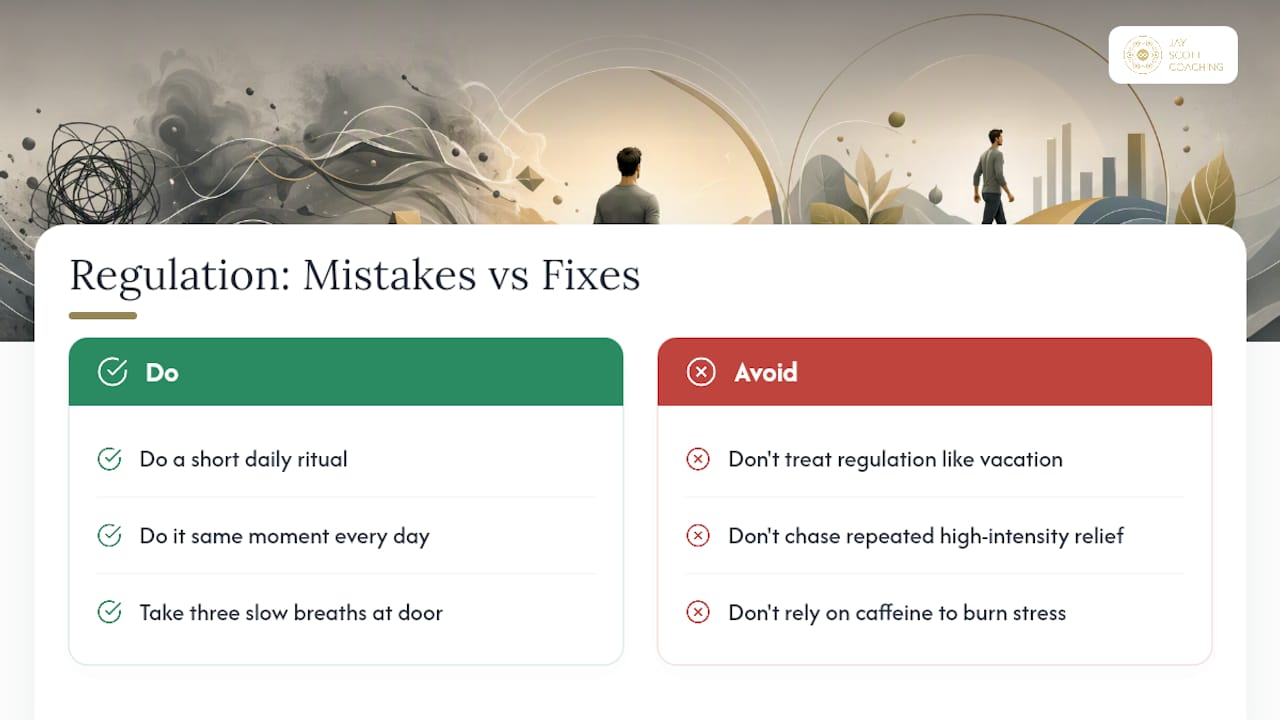
What works instead is smaller and more boring than people want it to be: the same short ritual, done at the same moment, every single day. Transition rituals matter more than most people give them credit for, according to Stanford's research on survival-mode regulation, because repetition is what teaches your body that safety is reliable, not situational.
If you try one thing this week, make it this: the moment you walk through your front door, take three slow breaths before you speak to anyone. That's it. Small, boring, repeatable. That's what actually rewires a nervous system.
— Jay
How Can Jay Scott Coaching Help You Build Lasting Regulation?
Breathing techniques get you through the next five minutes. Professional coaching programs are designed for men who want their calm under pressure to be a permanent trait, not something they have to re-earn every single day. Where a self-guided routine gives you tools, coaching provides integration, including external pattern tracking, insight into blind spots, and accountability when old habits creep back.
This type of coaching often appeals to executives, husbands, and high performers who have tried various strategies but still find themselves abandoning their own needs when pressure hits. If that sounds familiar, the next step is simple: visit Jay Scott Coaching to learn more about the Unshakable Man Method™ and apply for a consult call.
Where Can You Learn More About Nervous System Regulation?
For deeper reading, the Cleveland Clinic's vagus nerve guide covers clinical vagal-stimulation techniques. The PMC overview on autonomic regulation details the science behind breathwork and HRV. Stanford's survival-mode piece and the University of Melbourne's expert commentary both ground the daily-practice framing this article relies on.
This article is general information, not a substitute for advice from a qualified doctor. Consult a qualified healthcare professional about your own circumstances before acting on anything here.
Sources
- 5-Minute Nervous System Reset: 6 Techniques That Work Fast
- How To Reset Your Vagus Nerve Naturally - Cleveland Clinic
- Stuck in Survival Mode: How to Regulate Your Nervous System - Stanford Lifestyle Medicine
- What do people mean when they say their nervous system is overloaded or needs a reset? - University of Melbourne
- PMC article (systematic/overview) on autonomic regulation and interventions