

Yes, breathing can stimulate the vagus nerve. Slow, diaphragmatic breathing, especially when paced near six breaths per minute or shaped around an extended exhale, reliably increases cardiac vagal activity and shifts your body toward calm. Start today with five minutes of slow belly breathing. Stop if you feel lightheaded, and know that showing up consistently matters more than nailing a perfect ratio.
TL;DR:
- Slow, paced breathing at six breaths per minute or longer exhalations reliably enhances vagal activity and promotes a calm state, especially with consistent daily practice.
- Techniques like diaphragmatic breathing, resonance pacing, and 4-7-8 breathing are simple to learn and effective, but regular practice is more important than perfect technique.
- Breathing exercises can cause temporary lightheadedness or tingling, so those with specific health conditions should practice seated or lying down and consult a healthcare professional beforehand.
- Combining breathing with habits like humming, cold facial splash, or gentle yoga can support vagal tone, but claims of quick fixes via social media are often unproven.
- Coaching that integrates breathing into broader nervous system training tends to produce longer-lasting results compared to solo practice alone.
Table of Contents
- What Does the Vagus Nerve Do, and How Does Breathing Affect It?
- How Breathing Stimulates the Vagus Nerve You Can Actually Feel
- How Do You Practice Vagus Nerve Breathing Step by Step?
- What Are the Risks and Safety Rules for Vagus Nerve Breathing?
- What Other Simple Habits Support Vagus Nerve Activation?
- Why Coaching Turns a Breathing Practice Into Real Resilience
- Build Lasting Calm With Guided Nervous-System Training
- Sources
- FAQ
What Does the Vagus Nerve Do, and How Does Breathing Affect It?
Your vagus nerve is the longest cranial nerve in your body, running from your brainstem down through your neck, chest, and abdomen. It works in two directions. Afferent fibers carry signals from your organs up to your brain, while efferent fibers carry calming instructions back down. When the efferent side fires, your heart rate slows, digestion resumes, and inflammation tends to settle. That's the parasympathetic "rest and digest" system doing its job.
Breathing happens to be one of the few ways you can consciously influence this largely automatic system. A single session of slow-paced breathing at six cycles per minute increases RMSSD, a standard marker of cardiac vagal activity, across session lengths ranging from five to twenty minutes. The effect shows up during practice and tends to fade back toward baseline once you stop, at least in a single session.
Stat check: Researchers consistently point to roughly six breaths per minute as a resonance frequency where autonomic balance tips toward parasympathetic dominance, based on studies tracking RMSSD during slow-paced breathing.
A systematic review of breathing interventions backs this up at a larger scale, recommending diaphragmatic and slow breathing sessions of at least five minutes as effective tools for raising HRV and easing anxiety, provided you practice consistently rather than occasionally.
How Breathing Stimulates the Vagus Nerve You Can Actually Feel
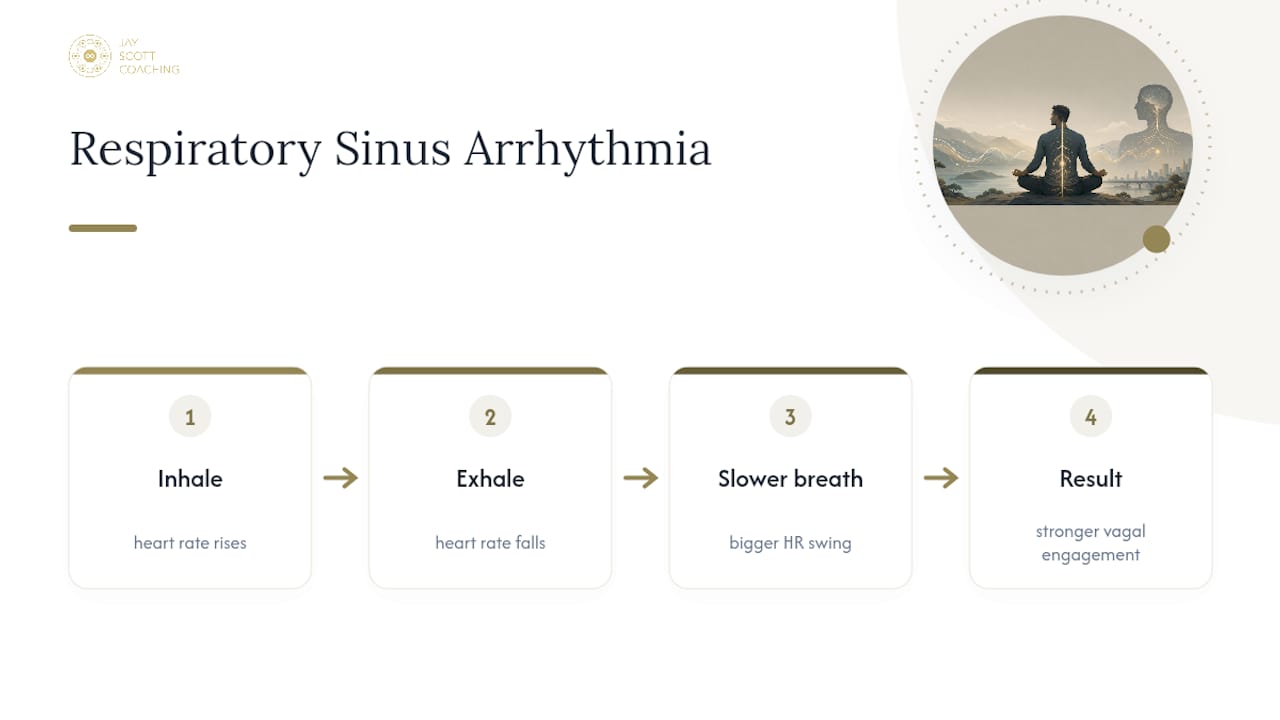
The mechanism behind this has a name: respiratory sinus arrhythmia. Your heart rate naturally speeds up slightly on the inhale and slows on the exhale, a rhythm tied to how your baroreflex, the system that monitors blood pressure, interacts with your breathing pattern. Slowing your breath amplifies that swing, and a bigger swing generally means stronger vagal engagement.
You don't need a lab to notice it working. During a slow-breathing session, you'll typically feel your heartbeat settle into a steadier rhythm, your shoulders and jaw loosen, and your exhale grow longer and quieter almost without trying. Your focus often sharpens too, a side effect of your nervous system no longer bracing for a threat.
Heart rate variability biofeedback devices can visualize this in real time, and meta-analytic data shows modest benefits for mood and HRV when people use them. They're a nice-to-have, not a requirement. A guided audio track or a simple timer works just as well for most people building the habit.
How Do You Practice Vagus Nerve Breathing Step by Step?
Three techniques cover almost everything you need, and each one builds on the last.
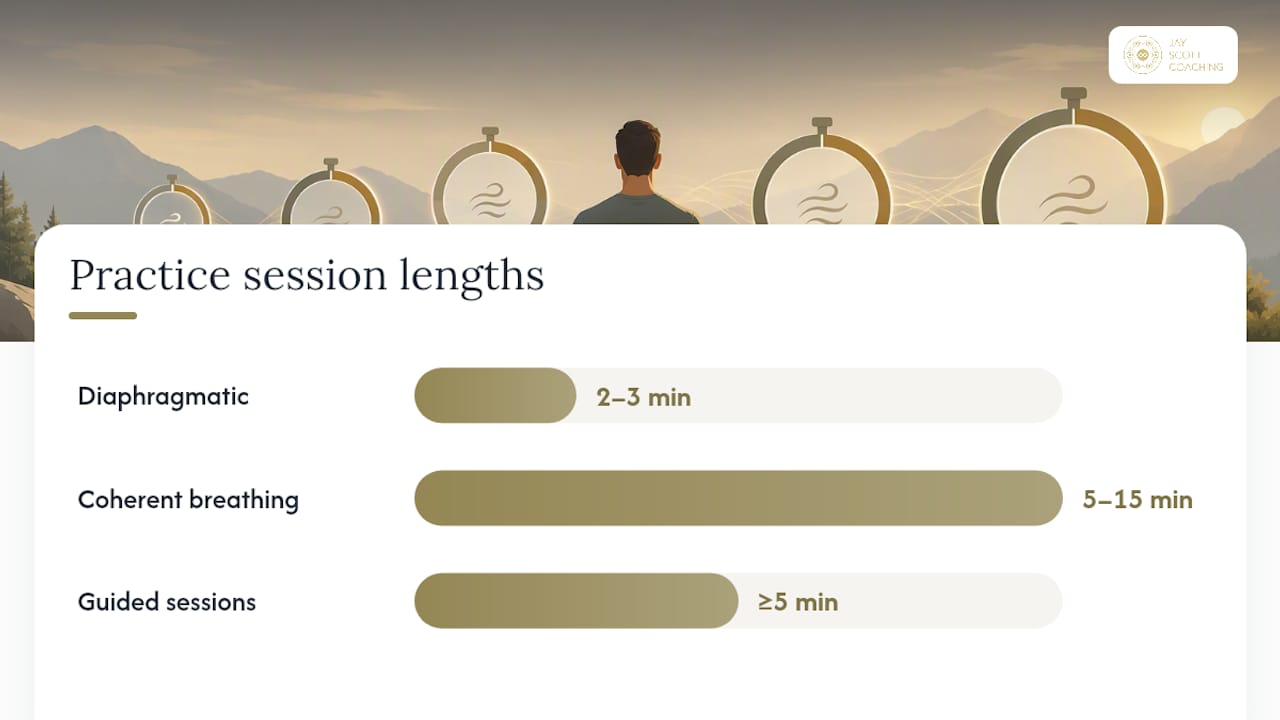
- Diaphragmatic breathing (the foundation). Sit or lie down, one hand on your chest, one on your belly. Breathe in slowly through your nose so your belly rises while your chest stays fairly still, then exhale through your mouth as your belly falls. Practice this for two to three minutes just to feel the difference between chest breathing and belly breathing.
- Coherent (resonance) breathing. Once diaphragmatic breathing feels natural, add pacing. Inhale for five seconds, exhale for five seconds, which lands you close to the six breaths per minute rate tied to increased vagal activity. Hold this for five to fifteen minutes.
- 4-7-8 breathing. Inhale for four seconds, hold for seven, exhale for eight. The extended exhale is the active ingredient here. If the seven-second hold triggers dizziness or a racing heart, drop it. A 5-5 or 4-4 pattern without the hold delivers a similar calming effect for most beginners.
A 12-week randomized trial found that extending the exhale and keeping inhale and exhale equal both reduced psychological stress, with no meaningful physiological difference between the two groups. The ratio matters less than showing up.
Pro Tip: Skip the mental math. Set a repeating five second chime on your phone's timer app, or use a free breathing pacer video, so you can close your eyes and just follow the sound instead of counting.
For scheduling, start with brief sessions twice daily for a week or so. Once comfortable, shift to one longer session daily lasting up to several minutes. A review of clinical trials on regulated breathing found that guided sessions of five minutes or longer, done repeatedly, outperformed one-off attempts at reducing stress and anxiety.
What Are the Risks and Safety Rules for Vagus Nerve Breathing?
Slow breathing is low risk for most healthy adults, but it isn't entirely without side effects worth knowing. Some people feel briefly lightheaded, notice tingling in their fingers, or in rare cases experience a vasovagal response, a sudden drop in heart rate and blood pressure that can cause fainting. If any of that happens, stop, sit or lie down, and return to your normal breathing rhythm until it passes.
If you live with dysautonomia, POTS (postural orthostatic tachycardia syndrome), a heart condition, or you're pregnant, practice seated or lying down rather than standing, and skip prolonged breath holds. Clinical guidance for dysautonomia and POTS specifically recommends gentle, seated or supine practice and steering clear of intense cold exposure or extended holds. Check with your doctor before starting if you have any of these conditions.
The reassuring finding across the research: breath-ratio differences between techniques often produce similar psychological benefit. That means your energy is better spent on showing up regularly at a slow pace than obsessing over which exact pattern is "optimal."
What Other Simple Habits Support Vagus Nerve Activation?
Breathing pairs well with a handful of other low-risk, evidence-informed habits that add variety without adding complexity.
- Humming, chanting, or gargling for one to three minutes vibrates the vocal cords, which sit near vagal fibers in your throat, and many people find it settling after a stressful call or meeting.
- A cold splash to the face (not a full cold plunge) can trigger a mild version of the dive reflex. Skip full immersion if you have any history of fainting or orthostatic intolerance.
- Gentle yoga and time with people you trust support vagal tone indirectly, since your nervous system reads safe social connection as a cue to downshift out of alert mode.
Worth a note of caution: many social-media "vagal hacks" lack real clinical trials behind them. Their benefit likely comes from general relaxation and the habit of pausing, not some precise, selective nerve trick. Breathing remains the technique with the strongest evidence behind it.
Why Coaching Turns a Breathing Practice Into Real Resilience
Here's what I've noticed reviewing this research: breathing exercises work in the moment, but most men who try them alone drift back to old patterns within weeks. The missing piece usually isn't information. It's structure and accountability.
At Jay Scott Coaching, the Unshakable Man Method™ builds breathing into a larger framework of nervous-system training rather than treating it as an isolated tool. That means pairing the physiology with habit formation, gradual intensity scaling, and real practice under the pressure of an actual hard conversation or high-stakes decision, not just a quiet room. It tends to serve high-performing men who already understand the "why" behind calming their nervous system and want the discipline to make it stick.
— Jay
Build Lasting Calm With Guided Nervous-System Training
Breathing exercises give you a starting point. Jay Scott Coaching gives you the structure to make that calm hold up under real pressure, at work, in your marriage, in the moments that actually test you. Unlike a breathing app or a solo routine you might abandon after two weeks, coaching adds accountability and a trained eye on your specific patterns.

Coaching programs built around the Unshakable Man Method™ are designed to help high-performing men move from anxious reactivity to steady, decisive leadership. If you've felt the short-term lift from a breathing session and want to know what it feels like as a permanent baseline, visit the why work with me page to see how the coaching process works and apply for a consultation.
This article is general information, not a substitute for advice from a qualified doctor. Consult a qualified healthcare professional about your own circumstances before acting on anything here.
Sources
- Single slow-paced breathing session at six cycles per minute: investigation of dose-response relationship on cardiac vagal activity
- Slow breathing for reducing stress: The effect of extending exhale
- Systematic review of regulated breathing practices and stress/anxiety outcomes
FAQ
Does 4-7-8 Breathing Stimulate the Vagus Nerve?
Yes. The extended exhale in 4-7-8 breathing is the part doing the work, slowing your heart rate through the same baroreflex mechanism that drives vagal activation in other slow-breathing patterns. If the seven-second hold feels uncomfortable, a 4-4 or 5-5 pattern without the hold offers a similar effect.
How Can You Reset Your Vagus Nerve Naturally?
Slow, diaphragmatic breathing practiced consistently, ideally daily for five to fifteen minutes, is the most well-supported natural way to shift your nervous system toward calm. Humming, gentle yoga, and safe cold exposure to the face can complement it, though breathing carries the strongest evidence behind it.
Does the Vagus Nerve Affect Breathing?
Yes, the relationship runs both ways. The vagus nerve helps regulate your respiratory rate and heart rhythm together, which is why slowing your breath on purpose can, in turn, increase vagal tone and shift your body into a calmer state.
What Are the Symptoms of a Damaged Vagus Nerve?
Vagus nerve damage can cause symptoms like difficulty swallowing, changes in voice, digestive problems such as delayed stomach emptying, and irregular heart rate. These symptoms differ from the mild, temporary lightheadedness some people feel during breathing practice, and any persistent symptom should be evaluated by a doctor rather than self-treated.
What Does Vagus Nerve Breathing Cost Through Coaching?
Jay Scott Coaching's Private Coaching, Groups, and Workshops & Immersions don't list public pricing, so current rates are available directly through the why work with me page. Breathing techniques themselves are free to practice on your own; coaching adds structure for men who want the effects to last under real pressure.