
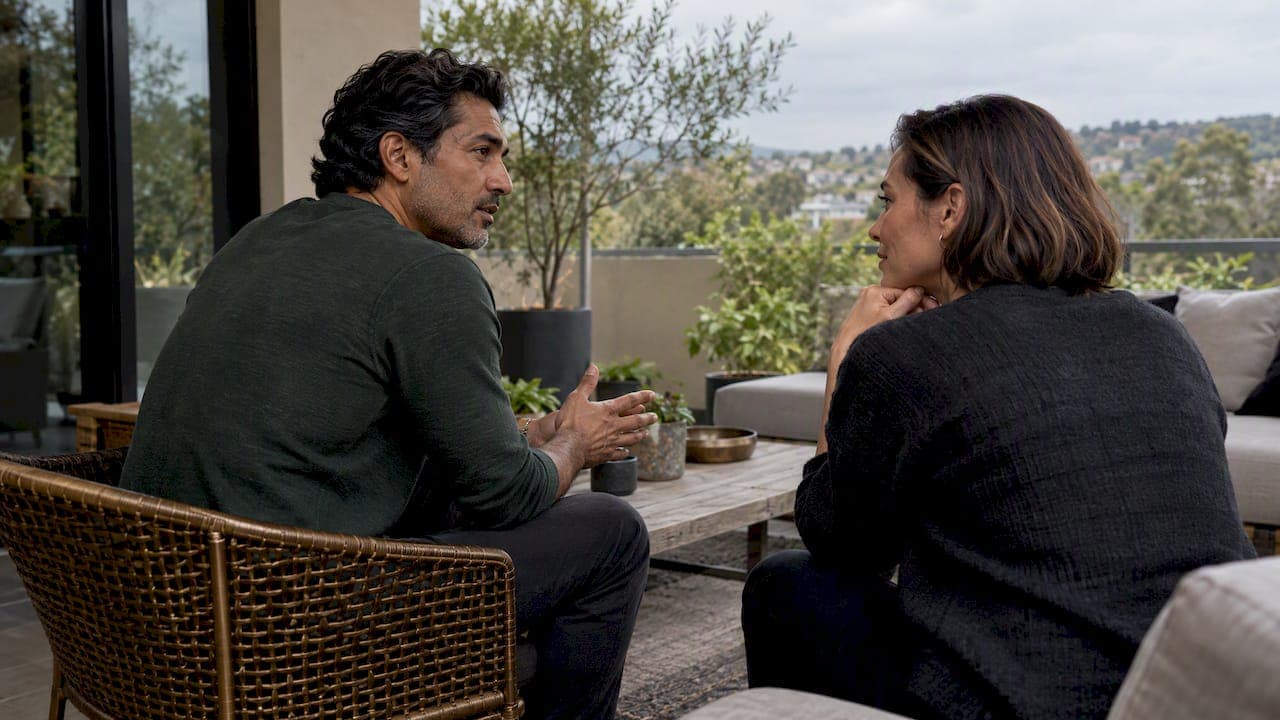
Masculine vulnerability is the willingness to let the right people see what is really going on inside you, including uncertainty, fear, tiredness and need, without handing over your dignity or your boundaries. It is not weakness, and it is not telling everyone everything. It is a skill you can learn, and it starts with choosing who, where and how much.
If you are a man who runs a team, a household, or both, you may know the feeling: you are the steady one, everyone leans on you, and no one asks how you are. This guide explains why opening up can feel risky, what safe vulnerability looks like, and how to start in small, doable steps.
TL;DR
- Vulnerability means letting trusted people see your real experience. It is not oversharing, and it is not weakness.
- Opening up feels risky for many men for real reasons: fear of judgment, rejection and breaking masculine expectations.
- Safe vulnerability is chosen: the right person, the right setting, the right amount.
- You can start by naming small feelings out loud and sharing mixed or unfinished thoughts with a partner or a trusted friend.
- Calming your body first makes it far easier to speak honestly when the stakes are high.
Table of Contents
- What masculine vulnerability actually means
- Why opening up feels risky for men
- Why the body has to come first
- How to be vulnerable safely
- Vulnerability in your marriage or relationship
- Vulnerability at work
- When the barrier is bigger than a conversation
- Our perspective
- Working on this with a coach
- How to support a man who struggles to open up
- FAQ
- Sources
What masculine vulnerability actually means
Most men hear the word "vulnerable" and picture a breakdown: tears in a boardroom, a confession to a room of strangers. That picture is why so many of us avoid the whole subject.
A more useful definition comes from research. A 2025 peer-reviewed review explains that vulnerability is context-dependent: a behavior is vulnerable when it risks interpersonal punishment based on a person's learning history. In plain words, what feels exposing to you depends on what happened the last times you showed your feelings. A man who was mocked for crying at eleven may find saying "I'm worried" at forty-five genuinely dangerous. Another man may find it easy.
That means healthy vulnerability is personal. It is not a script. It is the practice of moving a little past your own comfortable edge, with someone who has earned the right to hear it.

Vulnerability versus weakness
Weakness is collapsing under pressure and having no way back. Vulnerability is telling the truth about the pressure so you can deal with it. The man who says "I'm stretched thin and I need help deciding what to drop" is more dependable than the man who says nothing until he snaps or disappears.
Vulnerability versus oversharing
Oversharing is disclosure without discernment: unloading on someone who has not agreed to carry it, in a setting that cannot hold it, to relieve your own pressure rather than to connect. Vulnerability has a container. You pick the person, you pick the moment, and you pick how deep to go.
| Weakness | Oversharing | Healthy vulnerability | |
|---|---|---|---|
| Purpose | Escape or collapse | Release pressure at any cost | Connection and clarity |
| Audience | Whoever is there | Anyone, often the wrong person | A chosen, trusted person |
| Timing | When you can't hold it anymore | Impulsive | Intentional |
| Afterward | Shame or avoidance | Regret, feeling exposed | Relief, closeness, a next step |
Why opening up feels risky for men
If vulnerability feels dangerous, you are not being dramatic. The pressure is documented.
A 2013 study on gender stereotypes found that men may fear negative evaluation, rejection and appearing weak when they express intimacy, and may worry about violating masculine expectations. The 2025 review adds that masculine norms often socialize men to be stoic and unemotional, and that many men fear showing distress or asking for help will be punished. In the studies it examines, men disclose distress, emotions and requests for support at lower rates than women.
The fear of being judged can run deep. Some men find it helps to look at the fear directly, and reflections on courage, such as the meaning of 2 Timothy 1:7, speak to how fear can be met with a deliberate act rather than avoided.
What the silence costs
The American Counseling Association reports that pressure to conform to masculine norms can contribute to suppression, avoidance, recklessness, workaholism, internalization and chronic stress. It also states that restrictions on vulnerability, along with stigma, can contribute to serious mental and physical consequences for men.
You may recognize some of this in yourself:
- Staying late at work because home feels like a place where you have to "be on."
- Going quiet in an argument, then calling it "keeping the peace."
- Saying "I'm fine" so automatically that you no longer check.
- Making decisions slowly, or not at all, because you are scanning for everyone's reaction.
We call this self-abandonment: you leave your own experience behind to manage everyone else's. It is exhausting, and it is invisible, because from the outside you look like you have it together.
Why the body has to come first
Here is where most advice about "opening up" falls short. It tells you to talk, but it skips the part where your chest tightens, your mind races and your mouth shuts the moment it matters.
That is a nervous system response, not a character flaw. When your body reads a conversation as a threat, insight and good intentions do not get you very far. You can know exactly what you want to say and still go blank. Training your system to stay steady under pressure is what makes honest speech possible in the moment instead of three days later.

Two of our own guides go deeper on this. Emotional safety for men starts with a reset that takes about fifteen seconds, and emotional regulation for men shows how that same reset supports clear leadership. A steadier body does not make the conversation easy. It makes it possible.
How to be vulnerable safely
Safe vulnerability is not a leap. It is a ladder. Here is how to climb it without getting burned.
1. Choose the person first
Cleveland Clinic's men's mental health guide suggests identifying people you feel able to talk with and treating opening up to trusted male friends as opening communication, not as showing weakness. Ask yourself three questions about anyone you are considering:
- Have they kept something private before?
- Do they listen without rushing to fix or joke it away?
- Do they stay the same person toward me after hard conversations?
If the answer to all three is yes, they are a good candidate. If not, that is useful information too, not a reason to give up. It may mean the right person is a counselor, a coach, or a men's group rather than the friend you grab beers with.
2. Choose the setting
Face-to-face intensity is a lot for many men. Psychology Today reported in October 2026 that some men find side-by-side activities such as walking, sports or shared hobbies less pressuring, because there is less eye contact and less conversational intensity. A drive, a hike or a workout can carry a conversation that a restaurant table cannot.
3. Start with small, true statements
You do not need a big confession. Psychologist Nicholas Balaisis writes that emotional attunement does not require overwhelming emotion or crying. It can mean noticing and describing moment-to-moment experiences such as disappointment, frustration, tiredness or irritation.
Try sentences like these:
- "I'm more tired than I've been letting on."
- "That comment landed harder than I expected."
- "I'm irritated, and I think it's about something else."
Balaisis also recommends cutting distractions and allowing quiet time, since emotions and thoughts become easier to notice when constant scrolling or television is removed. Ten quiet minutes with no screen is a real practice, not a luxury.
4. Share the unfinished thought
Many men wait until they have a tidy answer before they speak. Psychologist Isaiah Pickens suggests practicing vulnerability by communicating ambivalent or contradictory feelings rather than waiting until your thoughts are perfectly settled. He notes that sharing uncertainty can help partners talk through hopes and fears and work toward shared solutions.
So instead of silence, try: "I don't know what I think yet, but I know something is off, and I want you to know that."
5. Keep your boundary
Vulnerability does not mean answering every question. You can say, "I'm not ready to go into that, but I'll tell you when I am." A boundary stated honestly is itself an act of openness, and it protects the trust you are building.
Vulnerability in your marriage or relationship
If you are afraid of being vulnerable with your partner, you are in common company. A 2005 article in the Journal of Couple & Relationship Therapy identifies help-seeking, masculine socialization and discomfort with emotions as central considerations when engaging men in couples counseling. Hesitation here is not a sign you do not care. It is usually a sign you care and have never been shown how.
The payoff is real. Balaisis states that describing your emotional experience aloud to a spouse or friend can let that person in and create a bridge to greater intimacy and connection.
A simple way to begin at home:
- Pick a calm moment, not the middle of a fight.
- Say one sentence about what you feel, not what she did.
- Add what you need, even if it is small ("I'd like you to just listen for a few minutes").
- Let her respond without defending yourself right away.
- Thank her for listening. That tells both of you the risk was worth it.
If you want more on this balance, our piece on balancing masculinity and vulnerability in relationships walks through it in more detail.
Vulnerability at work
At work, the bar is different. You do not owe colleagues your inner life. Professional vulnerability usually looks like saying "I don't have the answer yet," asking for input on a hard call, admitting a mistake early, or telling your team you need a day to think. That kind of honesty tends to make you more trusted, not less, because people stop guessing what you are not saying.
The same steadiness helps here too. Leaders who can stay grounded when a meeting turns tense make clearer decisions. Our guide on building emotional resilience in men covers the habits that support it.
When the barrier is bigger than a conversation
Sometimes the issue is not a skill gap. It is years of habit, shame or stress that make it hard to ask anyone for anything. Part of that is the belief that needing help means failing. Others look beyond conventional routes, such as spiritual mentoring and outdoor practice, for a setting where support feels less clinical.
If you are struggling with persistent low mood, hopelessness or thoughts of harming yourself, please talk to a doctor or licensed mental health professional, or call or text 988, the Suicide and Crisis Lifeline in the United States. Coaching is not a substitute for care in those situations.
Our perspective
We have seen the same pattern in a lot of capable men. They are not cold. They are overloaded, and they have learned that the safest move is to handle everything alone and say little. Over time that costs them closeness, clear decisions and a sense of who they are.
We do not think the answer is to push men to talk more. We think it is to build the internal capacity to stay present while you talk. That is why the Unshakable Man Method™ trains the nervous system to stay grounded under pressure, rather than relying on insight alone. When your body feels safe enough, honesty stops feeling like a threat, and you can act on what you know instead of overthinking and avoiding.
Vulnerability, to us, is not a performance of feelings. It is telling the truth to the right person at the right time, and then being able to stay in the room. Like any muscle, it gets stronger with use. Start small, and be patient with yourself.
— Jay
Working on this with a coach
Some men do this best alone, with a good friend and a steady practice. Others want structure, accountability and someone who understands the pressure of being the strong one. We offer private coaching, groups, and workshops and immersions for high-performing men who want to stay grounded under pressure, communicate honestly with the people they love, and act decisively instead of freezing. You can see how each works and apply on our coaching page.
If you want to read more first, these are good next steps: authentic masculinity and emotional intelligence for men.
How to support a man who struggles to open up
If you are the partner, friend or colleague of a man who finds this hard, pressure usually backfires. Cleveland Clinic psychologist Adam Borland's perspective is that one person opening the door can help men feel more comfortable and recognize that it is not a sign of weakness. Practical ways to do that:
- Share something of your own first, so he is not the only one exposed.
- Invite him into something side by side, like a project, a run or a drive.
- Respond to small disclosures with calm, not alarm or advice.
- Never use what he told you against him later.
FAQ
Is it a bad idea for men to be vulnerable?
Not when it is chosen. The risk comes from opening up to the wrong person or in the wrong setting, which is why trust and context matter. Start with someone who has kept your confidence before, and share in small steps.
How can I open up emotionally if I never learned how?
Begin by noticing and naming simple states, such as tired, irritated or disappointed, in a quiet moment without screens. Then say one of them out loud to someone safe. Skills like this build with repetition, not with one big conversation.
How do I become more emotionally available to my partner?
Share what you feel in the moment, including mixed or unfinished feelings, rather than waiting for a perfect answer. Describing your experience aloud is what lets her in. Pair it with a calm moment and a clear, small request.
What does it mean to be truly vulnerable?
It means letting a trusted person see your real experience, including fear, doubt or need, even though it carries some risk of being judged. It does not mean sharing everything with everyone. You keep control of how much and with whom.
Sources
- Masculinity, Social Connection, and Loneliness (PMC, 2025)
- The role of gender stereotypes in the social acceptability of intimacy expression (2013)
- Rethinking Masculinity, Counseling Today (American Counseling Association, 2024)
- 11 Tips for Men and Their Mental Health (Cleveland Clinic, 2024)
- Why Is It Harder for Men to Be Vulnerable With Each Other? (Psychology Today, 2026)
- How Men Can Become More Emotionally Attuned (Psychology Today, 2024)
- Men in Relationships: 3 Keys to Emotional Vulnerability (Psychology Today, 2017)
- Engaging Men in Couples Counseling (Journal of Couple & Relationship Therapy, 2005)
- Meaning of 2 Timothy 1:7
- Spiritual mentoring and outdoor practice