
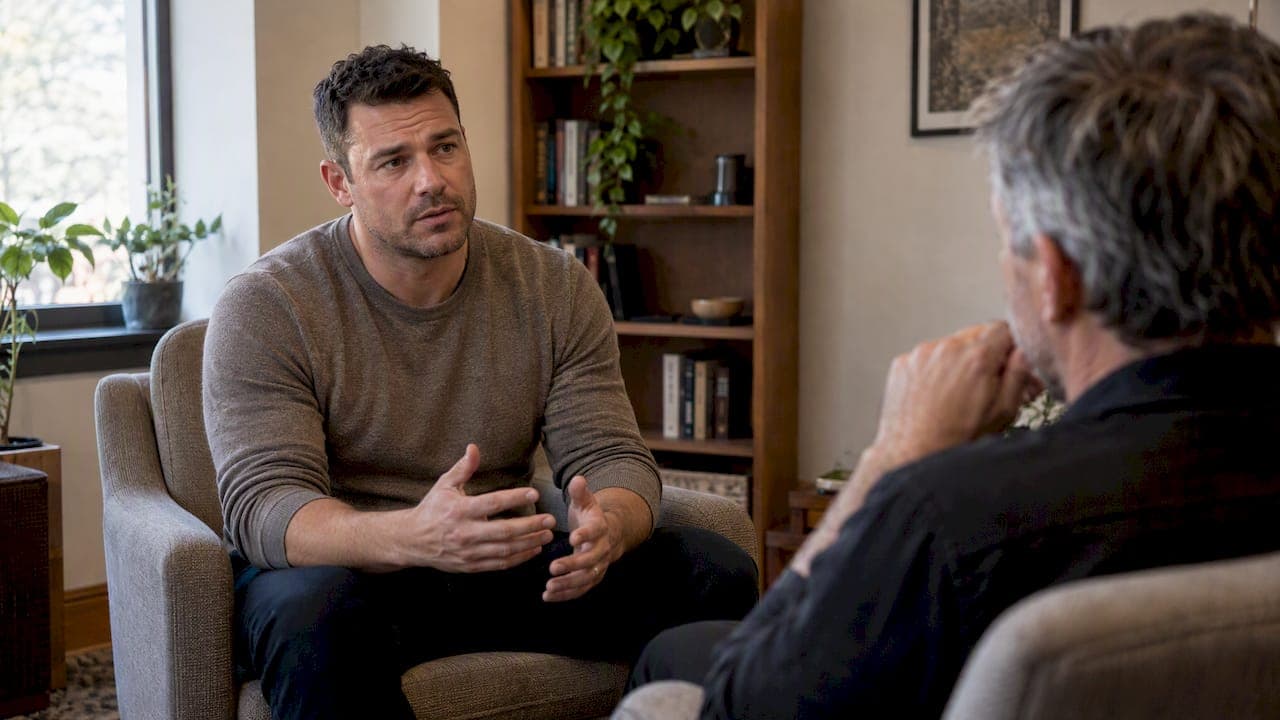
Yes, when approached safely, shadow work helps many men increase emotional regulation, repair relationships, and act with clearer purpose. The main gains we see are sharper self-awareness, steadier reactions under pressure, and more honest connection with the people who matter. One caveat comes first: if you're dealing with trauma, dissociation, or thoughts of self-harm, stabilize those symptoms with professional support before digging into deeper shadow material.
TL;DR:
- Experiential dynamic therapies show large effects against inactive controls, while CBT and DBT produce moderate improvements in emotion regulation; combine emotional access with coping skills.
- Start with sleep routines, daily grounding, and emotion naming; add journaling and chair work gradually, then introduce body awareness and honest conversations over six weeks.
- Avoid exploration until trauma, dissociation, thoughts of harming yourself, panic, insomnia, or severe anxiety are stabilized with professional support; pause if symptoms worsen after sessions.
- Solo journaling can surface more than you can process; use grounding afterward, and seek a trained therapist if distress persists or you feel detached.
- Practitioner accounts say structured men's groups with clear listening rules can reduce shame and encourage openness more than unstructured peer conversations.
Table of Contents
- What Shadow Work Is: From Jung to Modern Therapy
- Why Shadow Work Matters for Men: Masculinity, Alexithymia, and Emotion Regulation
- Evidence-Based Methods: Therapy, Groups, Journaling, and Somatic Practice
- Nervous-System Training and Emotion Work: An Applied Option
- Cautions and When to Stop
- A Safe 6-Week Starter Plan
- Why I Guide Men Through Embodied Shadow Work
- How Jay Scott Coaching Can Help
- FAQ
- Sources
What Shadow Work Is: From Jung to Modern Therapy
The term "shadow" comes from Carl Jung, who described it as the parts of ourselves we push out of conscious awareness because they feel unacceptable, embarrassing, or dangerous to show. That might be anger we were taught to suppress, neediness we learned to hide, or ambition we were told to downplay. The shadow isn't inherently bad. It's just unexamined, and what stays unexamined tends to leak out sideways, in outbursts, avoidance, or self-sabotage we don't fully understand.
Modern therapists have translated Jung's original concept into something more concrete and workable. Instead of mystical language about archetypes, clinical approaches now frame shadow work as a process of reducing psychological defenses so disowned feelings can surface and get processed rather than suppressed. The goal isn't to eliminate the shadow. It's to bring it into relationship with the rest of who you are, so it stops running the show from the basement.
This distinction matters because shadow work gets confused with generic self-improvement all the time. Self-improvement often chases a better version of yourself through optimization: more discipline, more productivity, more polish. Shadow work asks a different question. It asks what you're avoiding feeling, and why.
A few things separate real shadow work from surface-level self-help:
- It focuses on integration, not elimination: the goal is to make peace with a trait, not erase it.
- It tolerates discomfort rather than bypassing it with positivity or distraction.
- It looks backward at patterns and origins, not just forward at goals and habits.
That orientation, toward understanding rather than fixing, is part of why shadow work tends to land differently for men than standard self-improvement advice does.
Why Shadow Work Matters for Men: Masculinity, Alexithymia, and Emotion Regulation
Shadow work carries particular weight for men because of how masculine socialization shapes emotional life from an early age. Survey research on internalizing symptoms in men links adherence to traditional masculine norms, especially emotional control and self-reliance, to higher rates of alexithymia and worse emotion regulation. Alexithymia is the clinical term for difficulty identifying and describing your own feelings, and it's a common barrier for men who were raised to see emotional expression as weakness.
Men who strongly endorse emotional control and self-reliance tend to have higher rates of alexithymia, according to the same research, which also connects these patterns to internalizing symptoms like anxiety and depression. That matters because you can't regulate an emotion you can't name. Shadow work, at its core, is a practice in naming.
This shows up in a few recognizable patterns among men:
- Restrictive emotionality: a narrow range of "acceptable" feelings, usually anger or pride, while grief, fear, and tenderness stay buried.
- The "impossible project": throwing yourself into a solitary, grandiose pursuit (a business, a physique, a credential) as a stand-in for emotional repair that never happens.
- Performance over feeling: measuring your worth by output and control rather than by how connected or present you actually are.
Integrating shadow material tends to loosen these patterns. When you can name what you're actually feeling instead of acting it out sideways, reactivity drops. You stop snapping at your partner over something small because you've already processed the bigger thing underneath it. Relationships tend to shift first, because they're where suppressed material usually surfaces hardest.
Evidence-Based Methods: Therapy, Groups, Journaling, and Somatic Practice
Shadow work isn't one technique. It's a goal that different methods approach from different angles, and matching the method to what you need matters more than picking the "best" one.
Experiential dynamic therapies (EDTs), a category that includes approaches like Intensive Short-Term Dynamic Psychotherapy, focus on emotion-focused processing within sessions, helping you access and work through feelings you've learned to defend against. A 10-year systematic review and meta-analysis found large effects for EDTs compared with inactive controls, both immediately after treatment and at follow-up, which supports this kind of in-session emotional processing as a credible, evidence-backed path for exactly the work shadow integration requires.
Dialectical behavior therapy (DBT) and cognitive behavioral therapy (CBT) play a different but complementary role. A systematic review and meta-analysis found that CBT, DBT, and related approaches produce moderate improvements in emotion regulation across a range of conditions. Where EDTs help you access buried feeling, DBT and CBT give you skills to tolerate and regulate that feeling once it surfaces, which is often the missing piece for men who dive into emotional work without a stabilization plan.
Somatic therapies work through the body rather than only through talk, using breath, posture, and movement to help release tension patterns tied to suppressed emotion. They're especially useful for men who find it easier to notice a tight chest or clenched jaw than to name an emotion directly.
Beyond formal therapy, several practices give you a starting point on your own:
- Use structured journaling prompts that target disowned traits ("What trait in others bothers me most, and where have I shown it myself?").
- Try chair work: speak out loud to an empty chair as if addressing the part of yourself you usually avoid, then switch seats and respond as that part.
- Practice mirror work: look yourself in the eye and say the thing you'd normally swallow, out loud, without editing it.
- Join a structured men's group or circle, where shared rules around listening and non-fixing create a safer container than unstructured peer conversation.
Men's groups deserve a specific note here. Practitioner literature on men's personal growth describes how structure, clear listening rules, and direct facilitation reduce shame and increase engagement compared with looser, unstructured formats. Men often open up faster when the rules of the room are explicit rather than implied.
Solo work has real limits, though. Journaling and mirror work can surface material faster than you're equipped to process alone, and without a trained person to help you regulate what comes up, intense sessions can leave you more activated than when you started.
Pro Tip: Pair any solo shadow practice with a grounding technique you do immediately afterward, like slow exhale breathing or a short walk, so you close the session instead of leaving yourself activated.
Nervous-System Training and Emotion Work: An Applied Option
One reason shadow work destabilizes some men isn't the emotional material itself. It's attempting to process intense feeling without first building the nervous-system capacity to stay present while it moves through you. This is the gap that nervous-system training aims to close, and it's the foundation of the work we do through our Unshakable Man Method™.
The mechanism is straightforward in principle, even though the practice takes repetition. You build tolerance for activated feeling states gradually, while anchored by grounding and breathing tools that keep your body from flooding into panic or shutdown. Instead of either avoiding the charged material or getting swept under by it, you learn to stay present with it long enough for it to actually process and settle.
In practice, this looks like a few consistent elements:
- Pattern mapping: identifying the specific triggers, body sensations, and reactive habits tied to a particular shadow trait or old wound.
- Graded exposure to charged feelings: approaching intense emotion in small, manageable doses rather than all at once.
- Breath and grounding anchors: concrete physical tools you return to the moment activation starts to spike.
- Accountability and repetition: practicing the skill repeatedly until staying grounded under pressure becomes automatic rather than effortful.
This approach is built for men who are already functioning well in their careers and relationships but find themselves overthinking, avoiding, or abandoning themselves under pressure. If that pattern sounds familiar and you want support tailored to your specific situation, a consult through Shift Some Timber is a reasonable next step before committing to anything.
Cautions and When to Stop
Shadow work can surface more than you bargained for, and knowing the warning signs protects you from doing real harm to yourself in the name of growth. The Cleveland Clinic's guidance on shadow work recommends grounding practices and professional support, and specifically advises stabilizing panic, insomnia, or severe anxiety before attempting deeper shadow exploration.
Stop and seek professional help if you notice any of these:
- Thoughts of self-harm or suicide, even passing ones.
- Flashbacks or intrusive memories that feel like they're happening now, not in the past.
- Strong dissociation: feeling detached from your body, your surroundings, or your sense of self.
- Escalating panic, insomnia, or anxiety that doesn't settle after a session.
- A sense of being "too much" to handle alone, with no safe person or practitioner to process it with.
When you're ready to find professional support, look for a therapist trained in experiential dynamic therapy, ISTDP, or trauma-informed somatic work, and ask directly whether they build distress-tolerance skills into sessions before pushing into deeper material. That scaffolding is the difference between processing and overwhelming yourself.
A short stabilization toolbox helps in the meantime: DBT-style distress tolerance skills, a go-to grounding anchor like naming five things you can see and hear, and basic sleep and routine consistency. These aren't advanced techniques. They're the floor that makes deeper work safe to attempt.
Pro Tip: If a session leaves you more anxious or foggy the next day than before, that's a signal to slow down and add more stabilization, not to push harder.
A Safe 6-Week Starter Plan

A structured timeline keeps shadow work from becoming either an overwhelming free fall or a practice you abandon after one intense session. This plan builds capacity before it asks for depth.
Week 1: Stabilize. Before touching any shadow material, build the foundation that makes the rest of the work safe.
- Set a consistent sleep and wake time, even on weekends.
- Practice one grounding technique daily, such as slow exhale breathing for two minutes.
- Do a 5-minute daily check-in: name one emotion you felt that day, using a feelings list if naming it is hard.
Weeks 2 through 4: Notice, name, and dialogue. With a stable base, start engaging directly with shadow material in small, structured doses.
- Use a journaling prompt twice a week: "What do I criticize most in others, and where does that trait show up in me?"
- Try a short chair-work exercise once a week, speaking as the avoided part of yourself for two or three minutes.
- Notice one reactive pattern as it happens in real time (a snap of irritation, a withdrawal, a joke that deflects a real feeling) and write one sentence about what was underneath it.
Weeks 5 and 6: Add somatic practice and integrate. This phase connects insight to your body and your relationships, where the real test of integration happens.
- Add a body-based practice, such as slow breathing paired with noticing where tension sits physically when a shadow trait gets triggered.
- Pick one relationship and practice saying one honest, previously avoided thing, in a low-stakes moment, not a high-conflict one.
- Schedule a check-in with a therapist or coach to review what surfaced and get a second perspective on your progress.
- Reassess: are you more reactive or less? More connected or more withdrawn? Let the honest answer guide whether you continue at this pace, slow down, or bring in more support.
If any week feels like it's surfacing more than you can safely hold on your own, that's the moment to pause and bring in professional support rather than pushing through on willpower alone.
Why I Guide Men Through Embodied Shadow Work
I build nervous-system capacity before asking a man to face his shadow material directly, because insight without regulation tends to collapse under pressure. I've watched men intellectually understand their patterns for years without anything actually changing, because understanding a pattern and having the nervous-system capacity to stay present while it surfaces are two different skills.
The work I do is embodied first: breath, grounding, pattern mapping, so that when the harder material comes up, a man has somewhere steady to stand. Clients I work with tend to describe this as the difference between knowing something and actually being able to act differently in the moment that matters.
None of this requires an immediate decision from you. If something in this piece sounds familiar, sit with it before you act on it. The right next step usually becomes clearer once you've actually named what you're avoiding.
— Jay
How Jay Scott Coaching Can Help
If you've read this far and recognized yourself in the patterns above, overthinking under pressure, performing instead of feeling, abandoning your own needs to keep the peace, structured coaching can give you a faster, more direct path than solo practice alone. We work with men through a method that trains your nervous system to stay grounded under pressure instead of overthinking or avoiding what's actually happening inside you.

Our support takes a few forms, depending on what fits your situation:
- Private coaching: one-on-one sessions focused on your specific triggers, patterns, and goals.
- Groups: structured peer work alongside other men doing the same kind of inner work.
- Workshops & Immersions: focused, intensive experiences for deeper, faster progress.
Each of these gives you tools, pattern mapping, and direct support for the relationships and career pressure points where self-abandonment tends to show up most. If you want to see whether this approach fits where you are right now, visit our why work with me page to learn more and apply for a consult.
This article is general information, not a substitute for advice from a qualified doctor. Consult a qualified healthcare professional about your own circumstances before acting on anything here.
FAQ
Does shadow work actually work?
Shadow work can work well for many men, particularly when it's paired with emotion-regulation support rather than attempted in isolation. Research on experiential dynamic therapies found large effects for this kind of emotion-focused processing compared with inactive controls, both right after treatment and at follow-up.
Can I do shadow work myself?
Yes, to a point: journaling, mirror work, and self-reflection prompts are reasonable starting practices for most men. But solo work has real limits, and the Cleveland Clinic recommends grounding techniques and professional support, especially if you're dealing with trauma, panic, or severe anxiety that solo practice alone can't safely hold.
Can you give me an example of shadow work?
A common example is noticing a trait that irritates you intensely in other people, then honestly examining where that same trait shows up in your own behavior, often in a more hidden or indirect form. Journaling on that question, or voicing it out loud through a chair-work exercise, is a concrete way to start the process.
How do I begin shadow work for beginners?
Start by stabilizing first: consistent sleep, a daily grounding practice, and a simple emotional check-in before you touch deeper material. From there, structured prompts, short self-dialogue exercises, and a gradual pace over several weeks tend to work better than diving straight into intense emotional territory.
Sources
- The Efficacy of Experiential Dynamic Therapies: A 10‐Year Systematic Review and Meta‐Analysis Update - PMC
- Emotional Regulation as a Transdiagnostic Process of Emotional Disorders in Therapy: A Systematic Review and Meta-Analysis - PubMed
- Shadow work guide — Cleveland Clinic
- Internalizing Symptoms in Men: The Role of Masculine Norms, Alexithymia, and Emotion Regulation | Sex Roles